One hundred and ten years of Bugatti.
Ten cars to carry its name.
The Anniversary
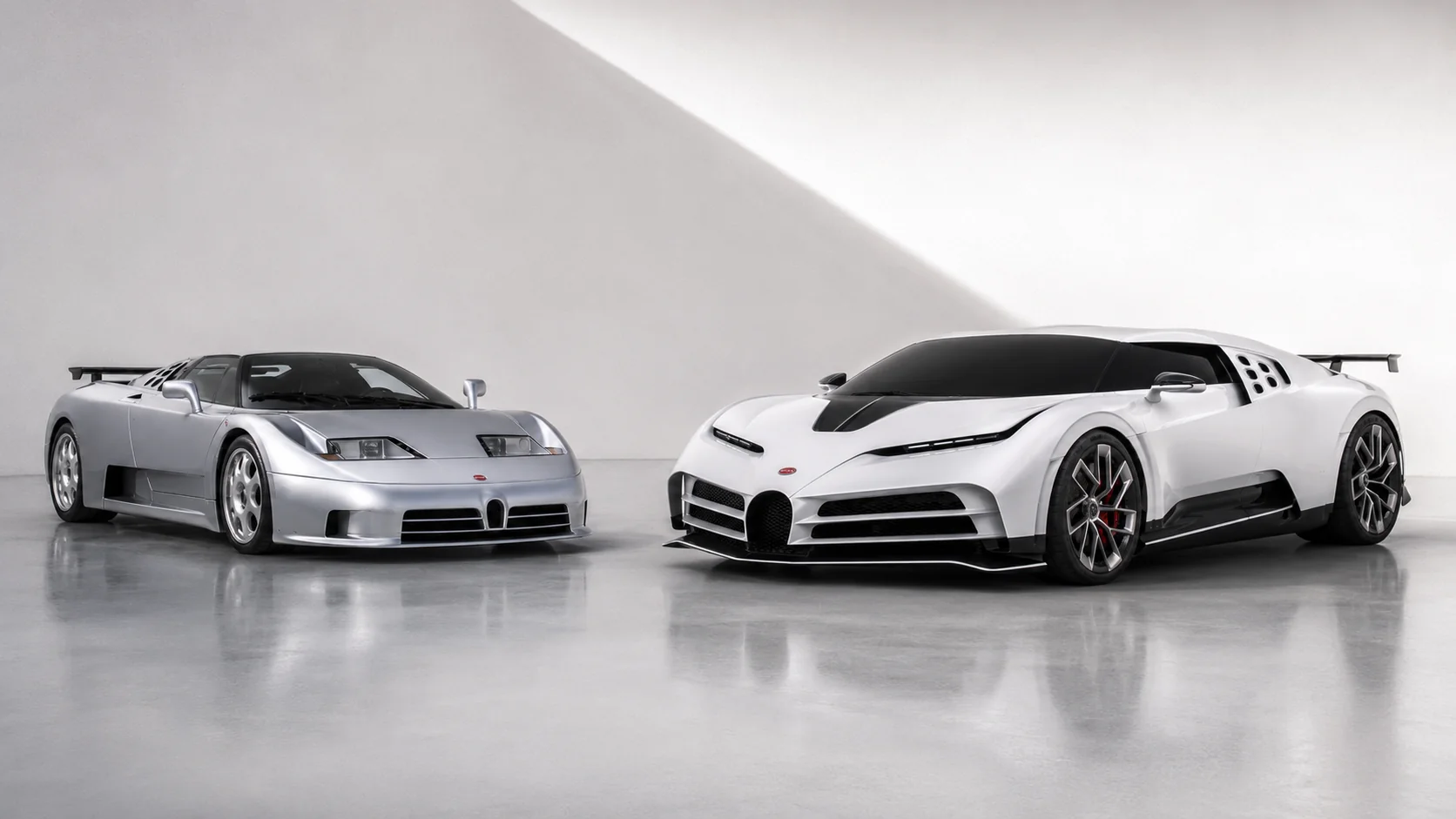
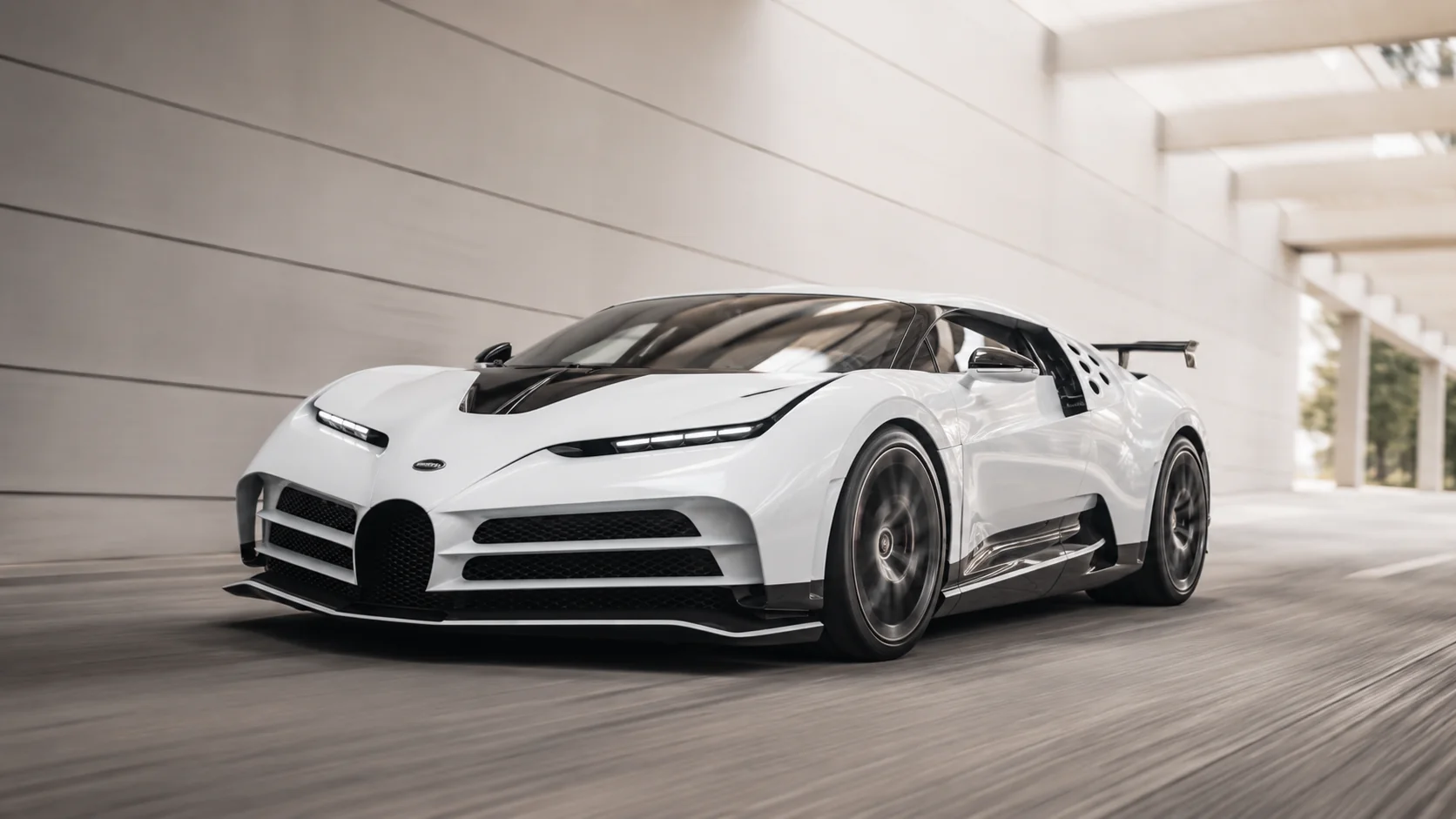
In 2019, at Pebble Beach, Bugatti unveiled a car built to answer a single question: what would the EB110 look like today?
Its name is the Italian word for 110, marking 110 years since Ettore Bugatti founded his workshop in Molsheim. It answers directly to the EB110, the car that brought the marque back to life in the early 1990s under Romano Artioli.
Built on the architecture of the Chiron, it carries the EB110's proportions forward without borrowing a single panel.
Nothing copied. Everything rethought.
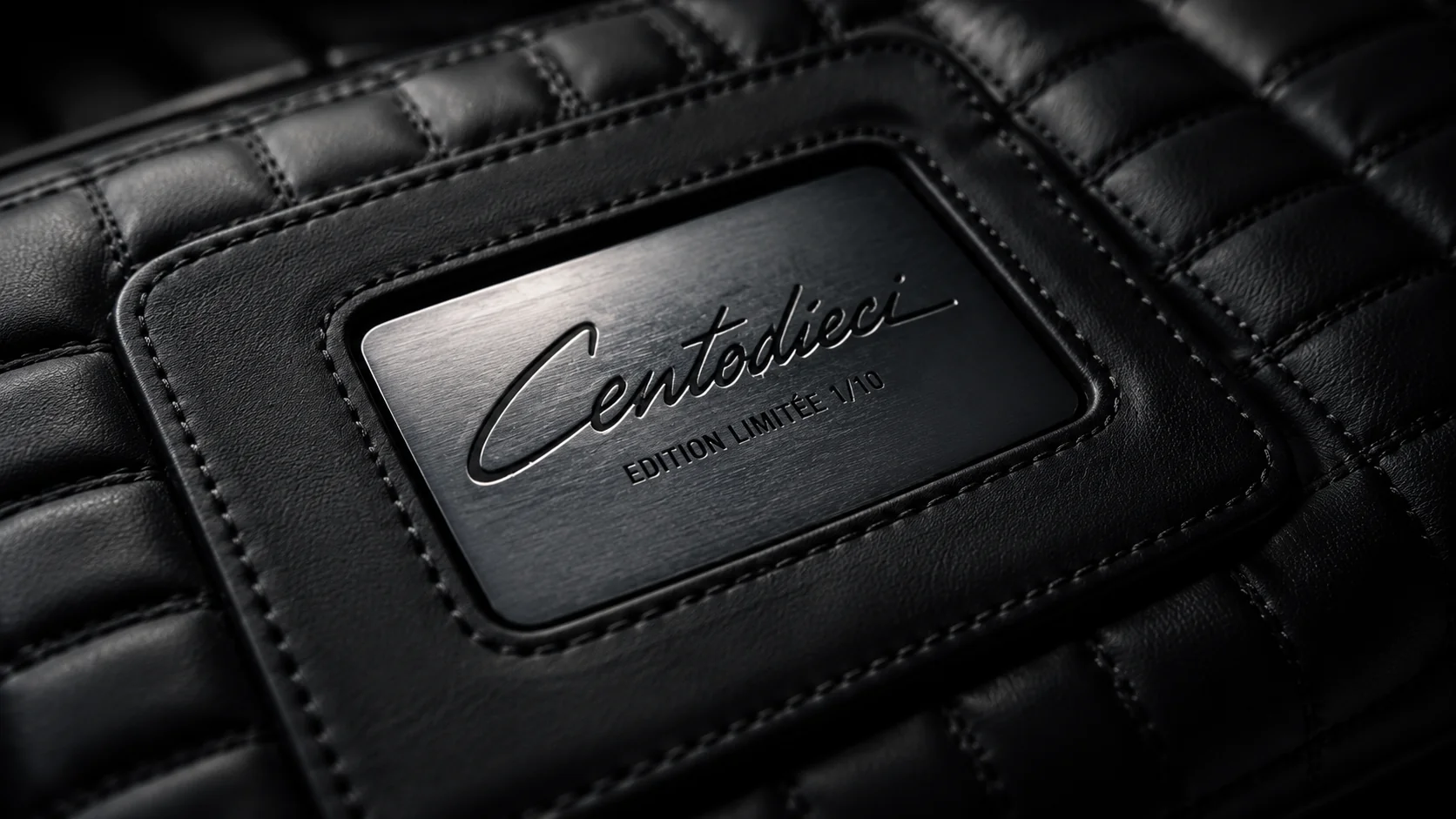
Ten were commissioned. All ten were spoken for before the car was even shown.
The Design
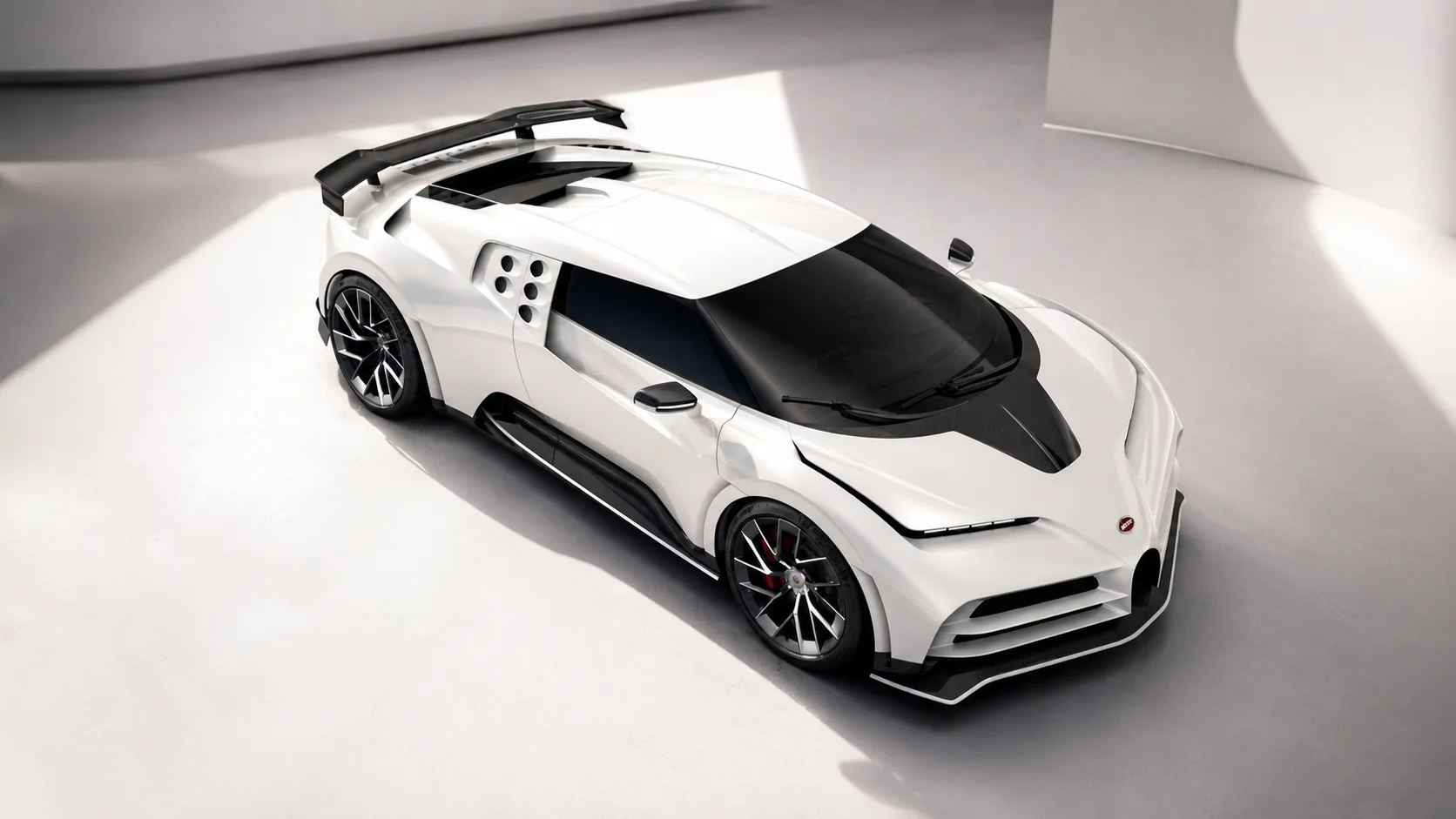
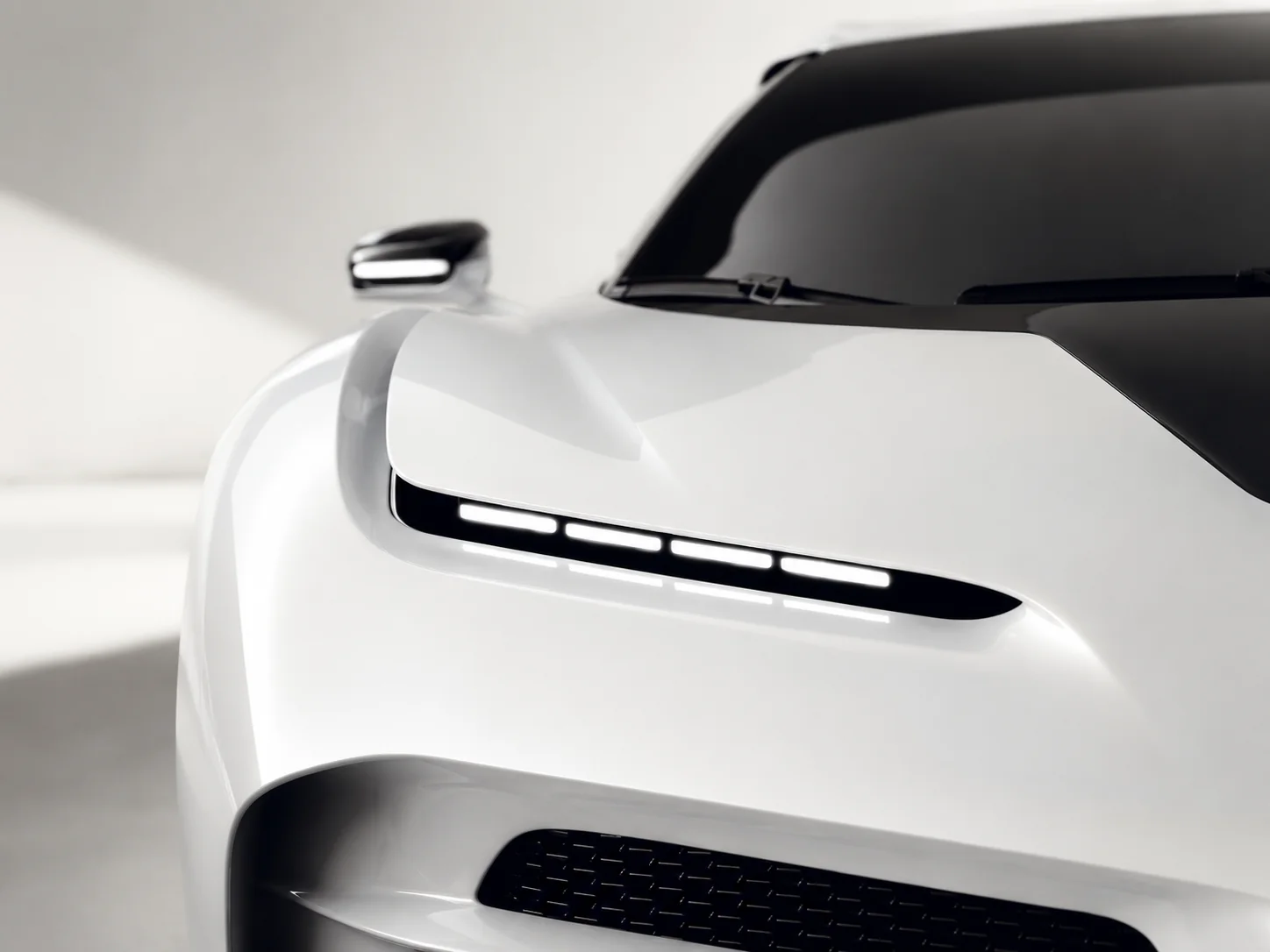
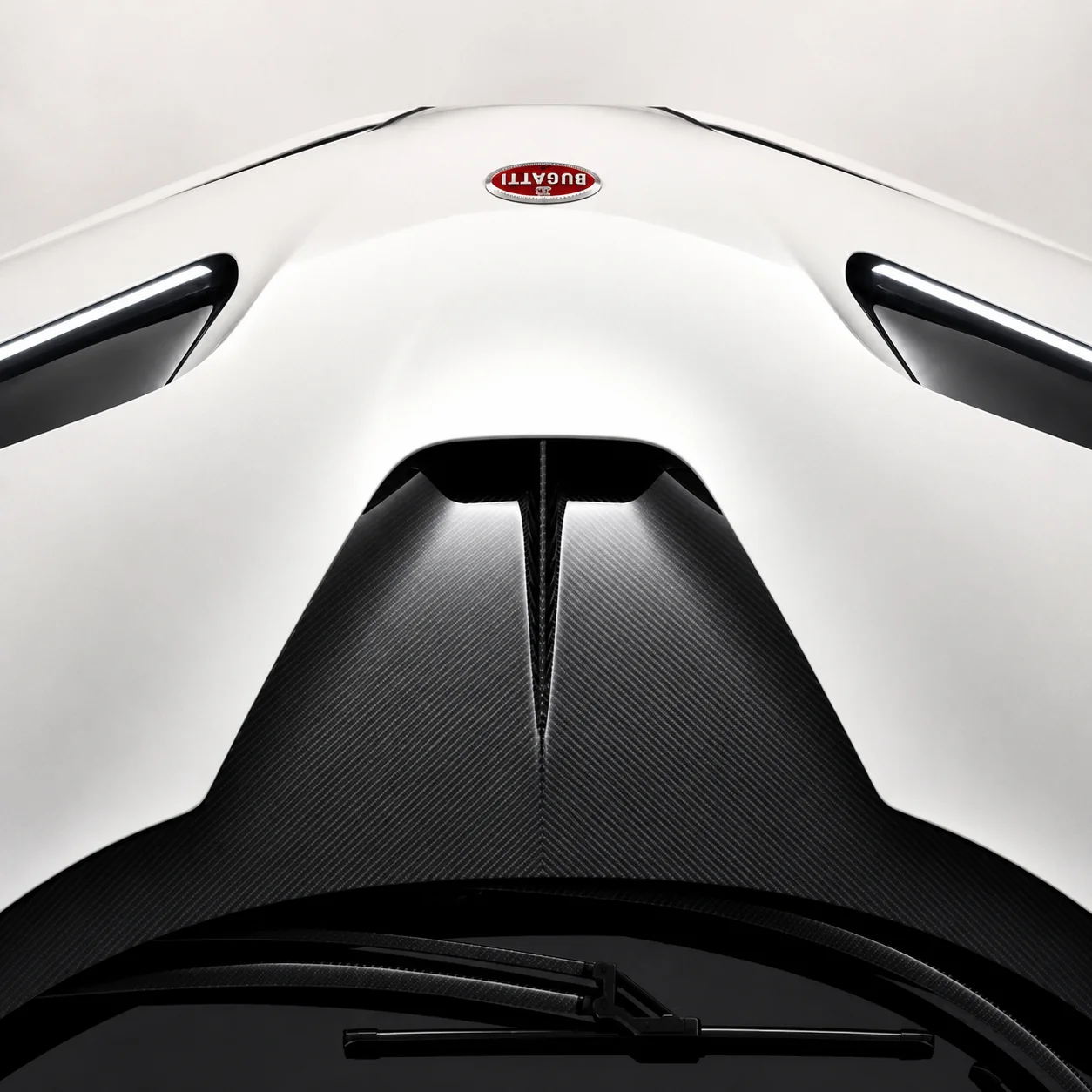
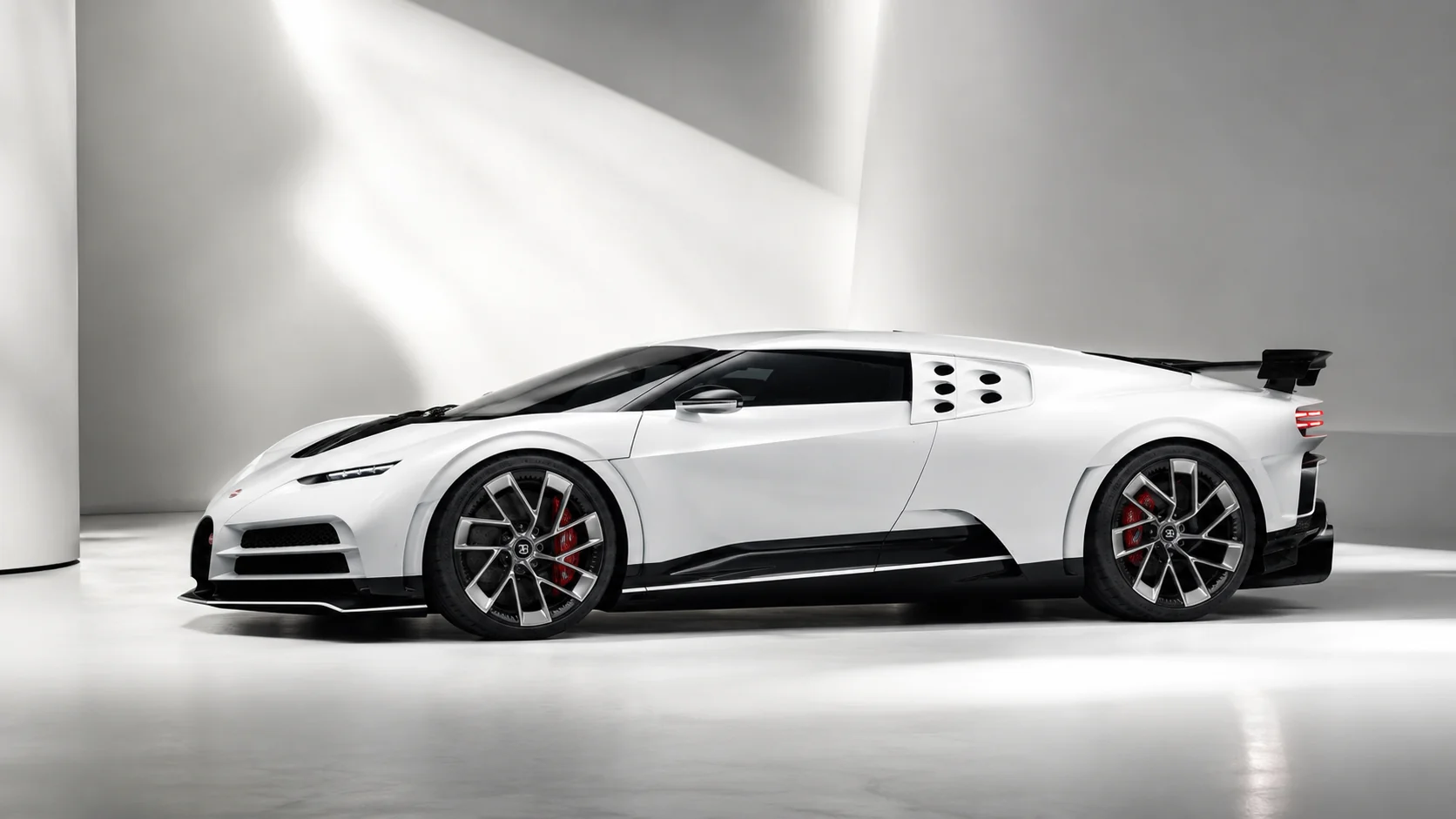
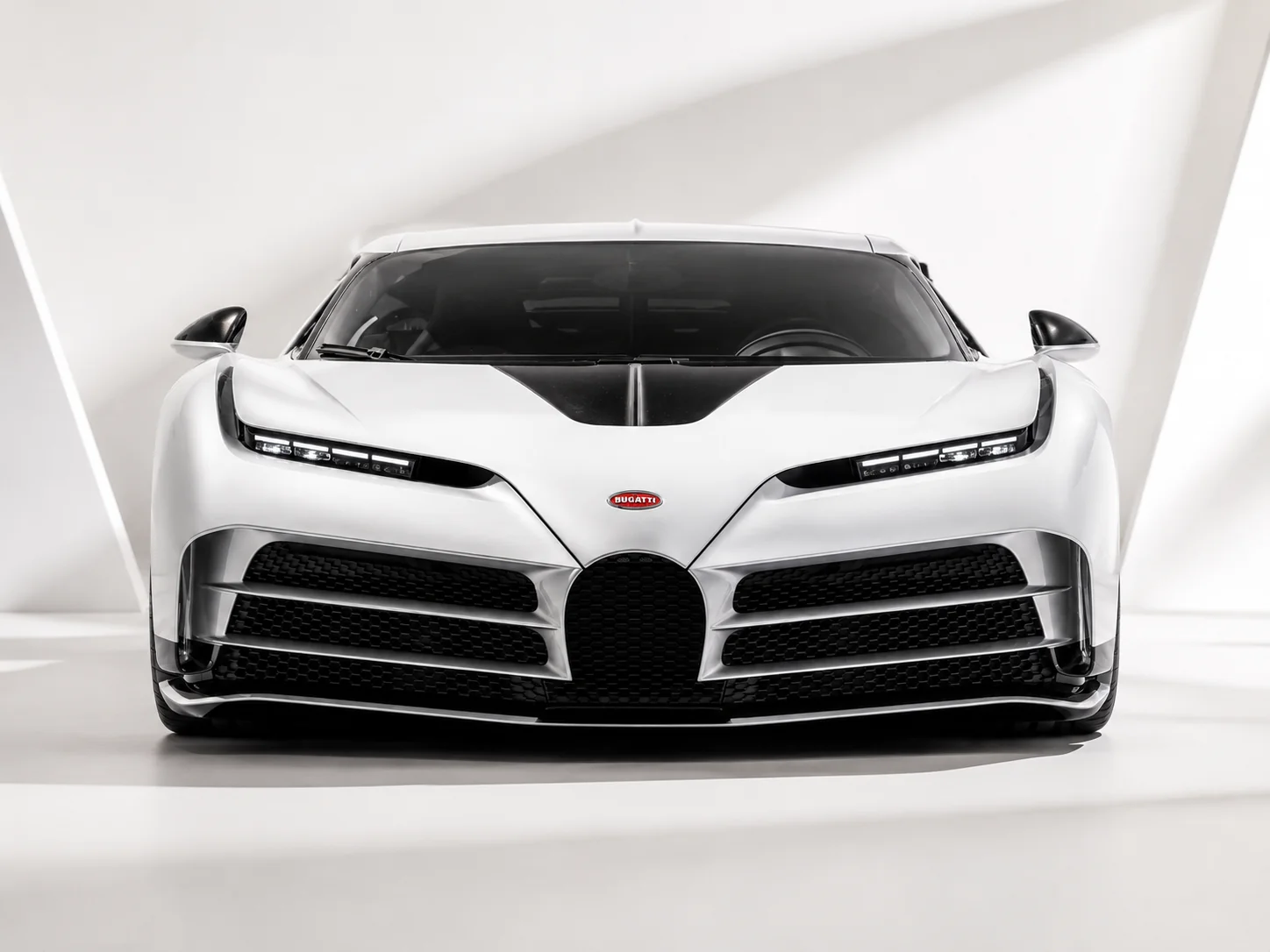
The horseshoe grille sits lower and narrower than on any other modern Bugatti, a direct echo of the EB110's understated nose. The headlamps are drawn into slim LED strips, a contemporary reading of the EB110's slab-shaped units.
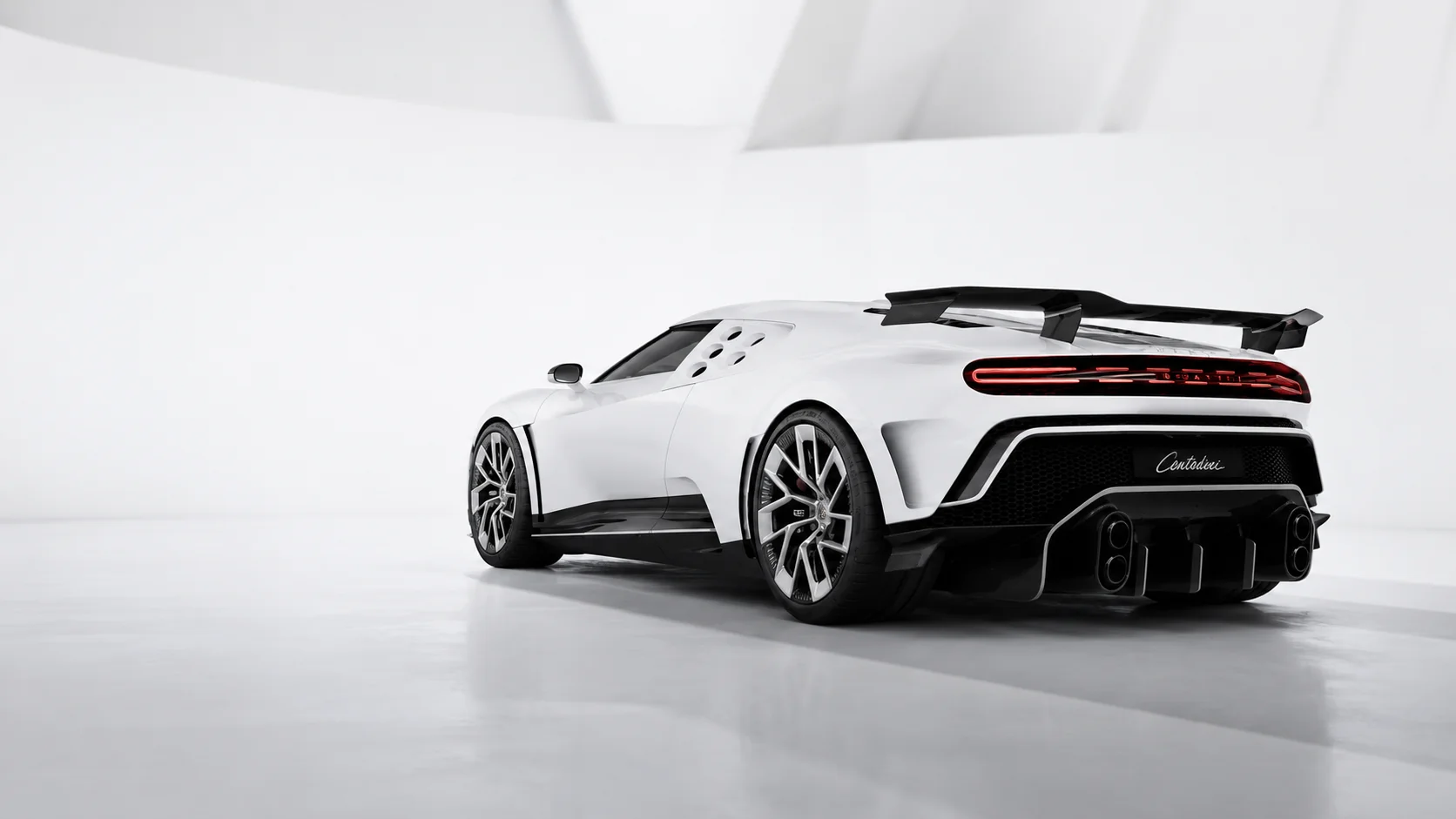
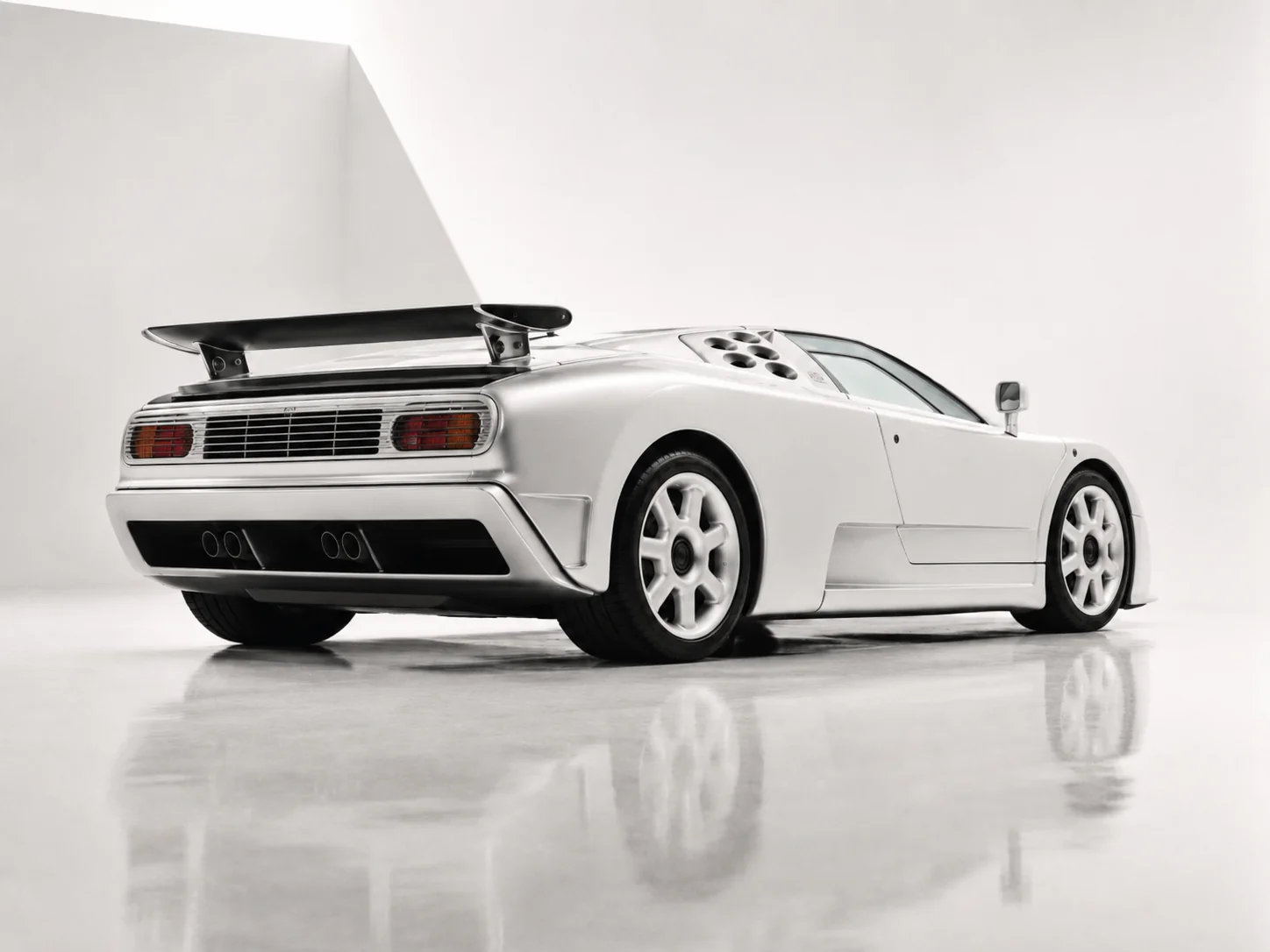
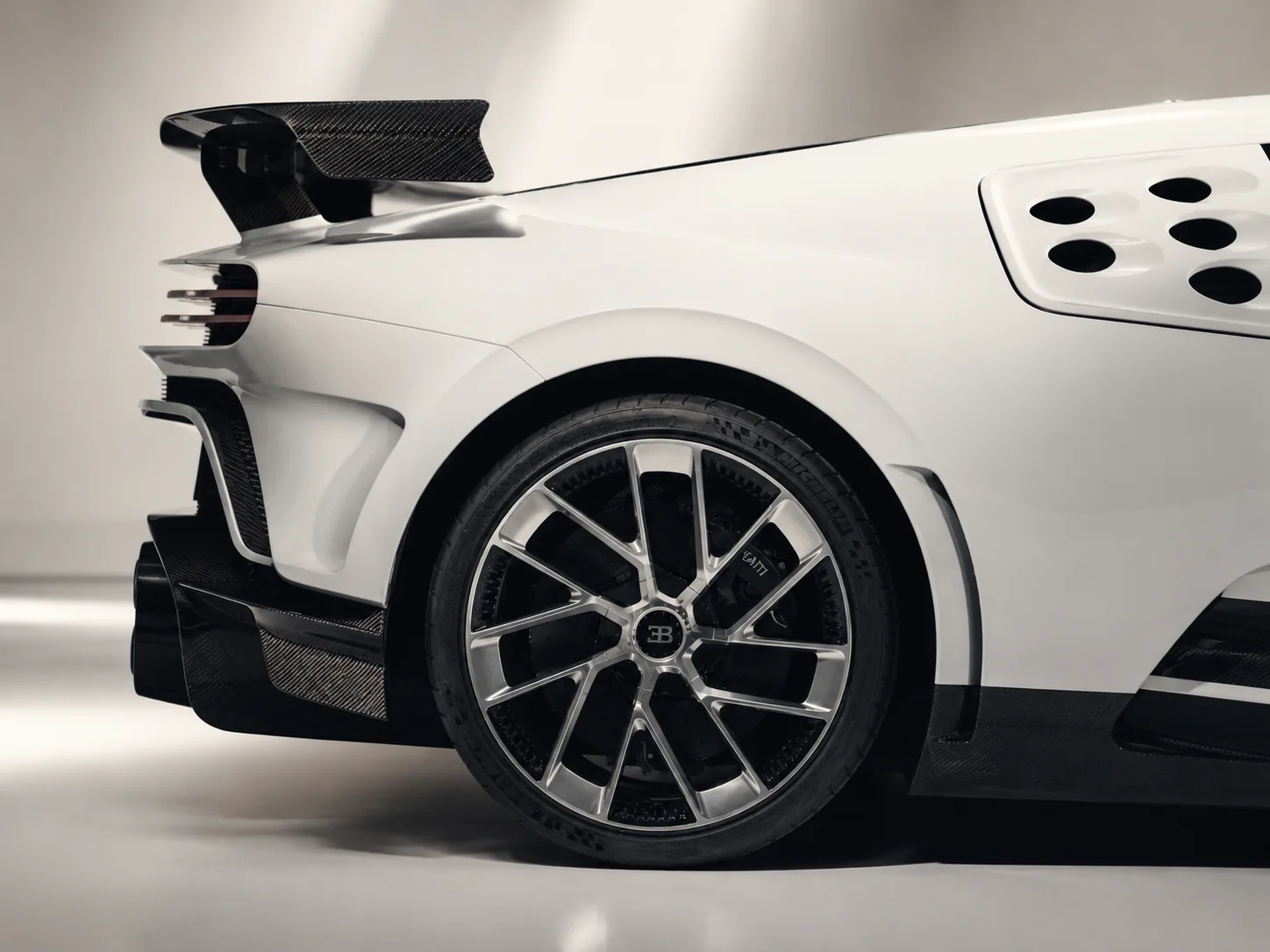
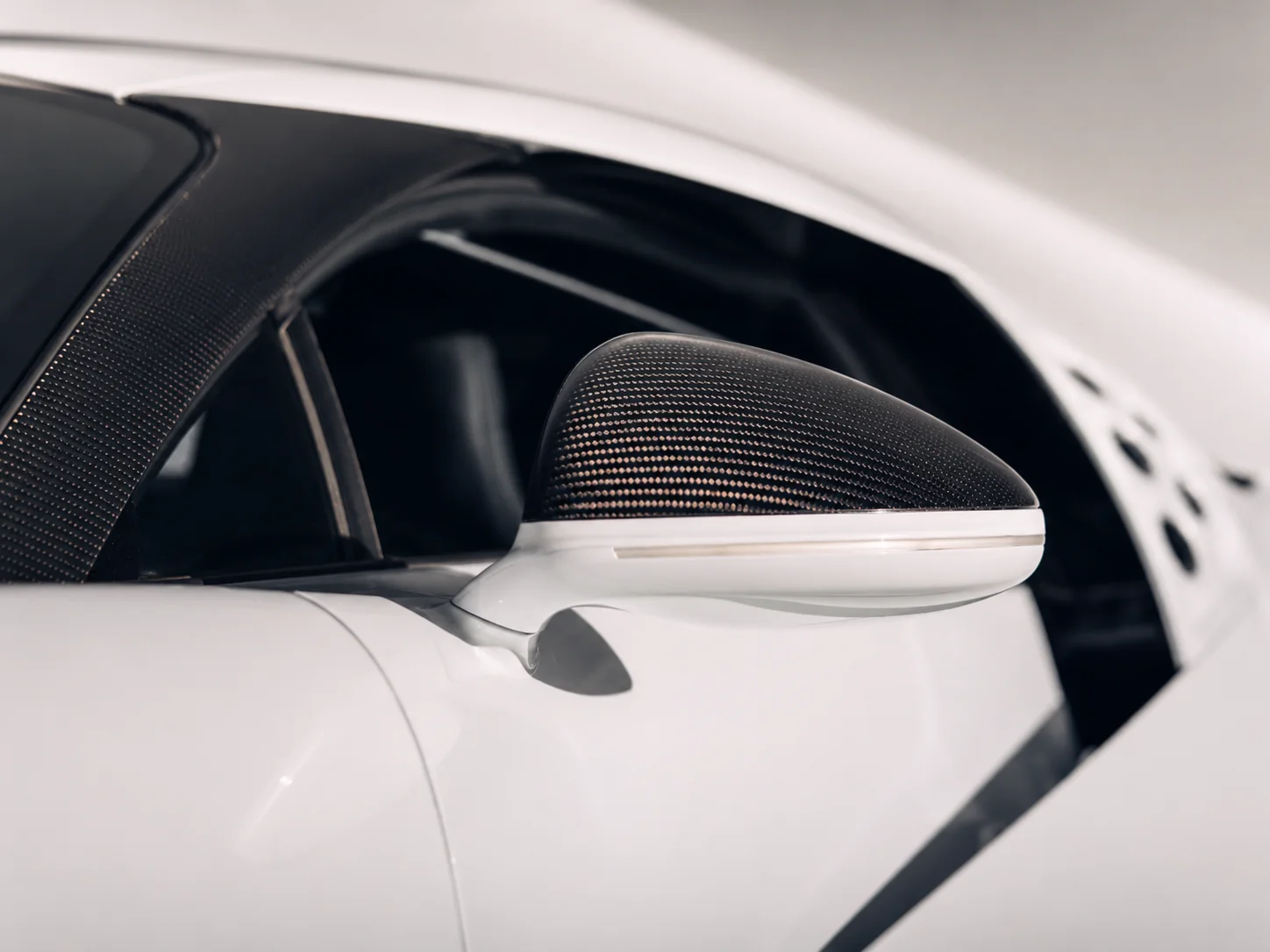
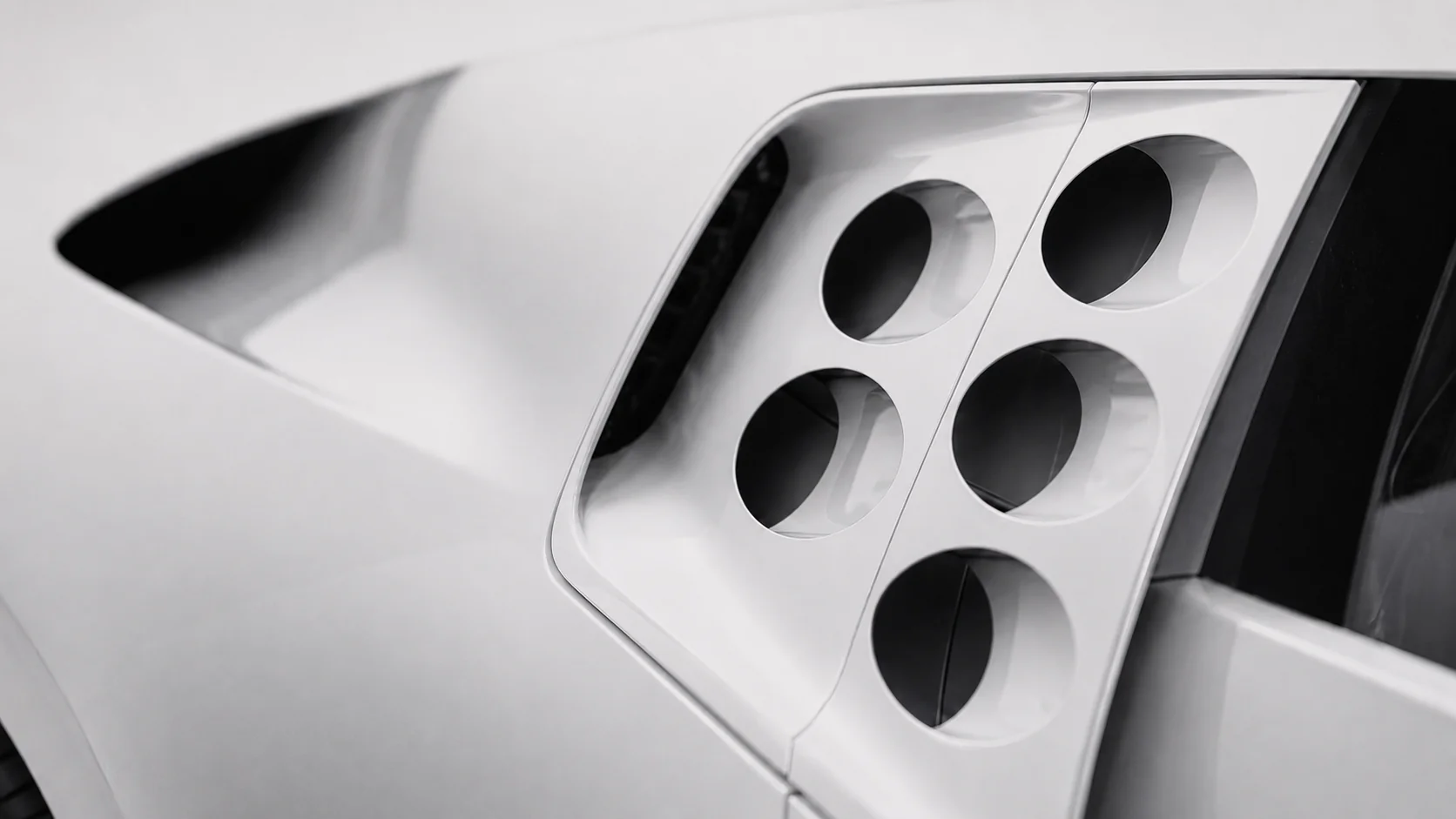
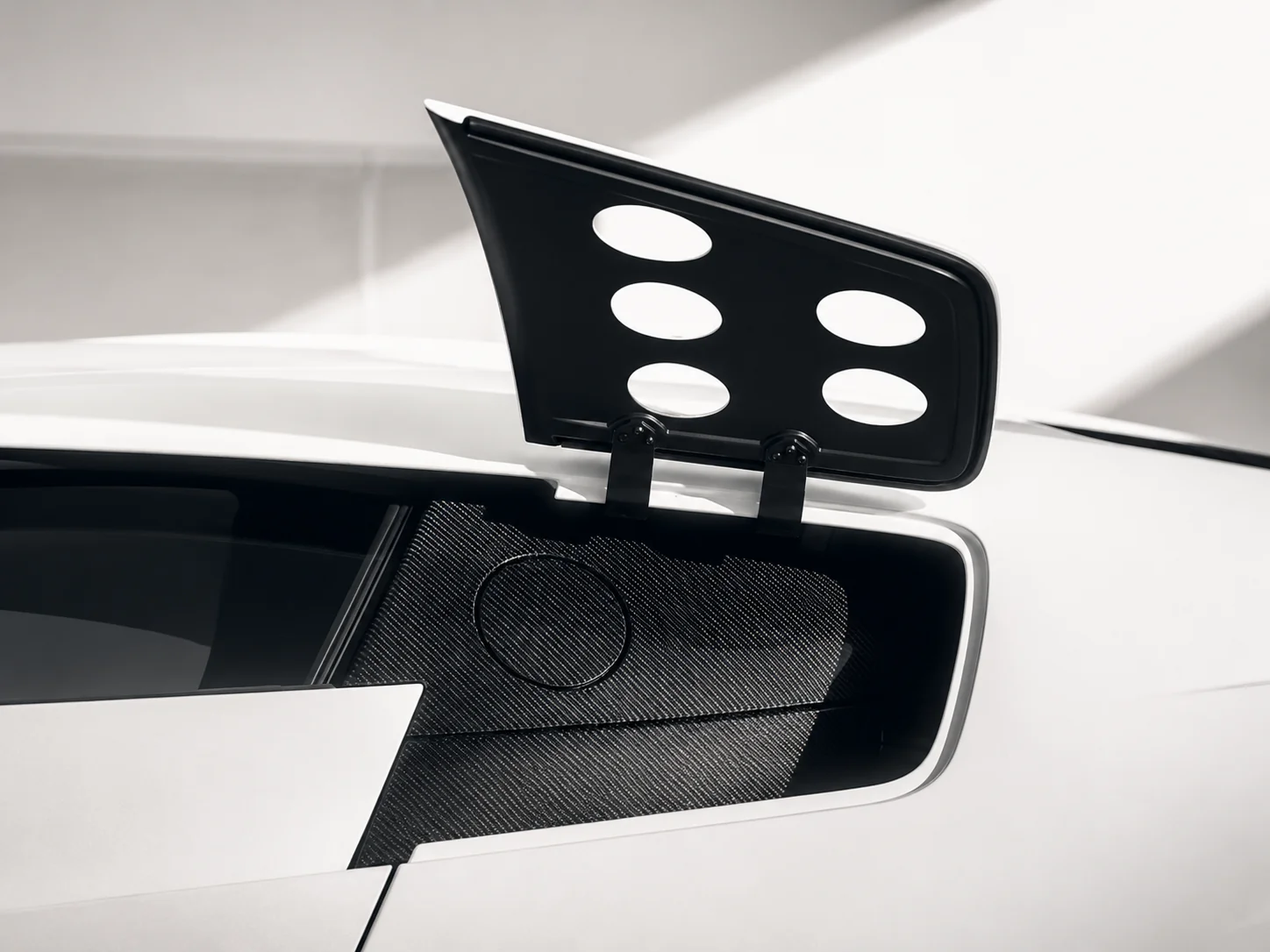
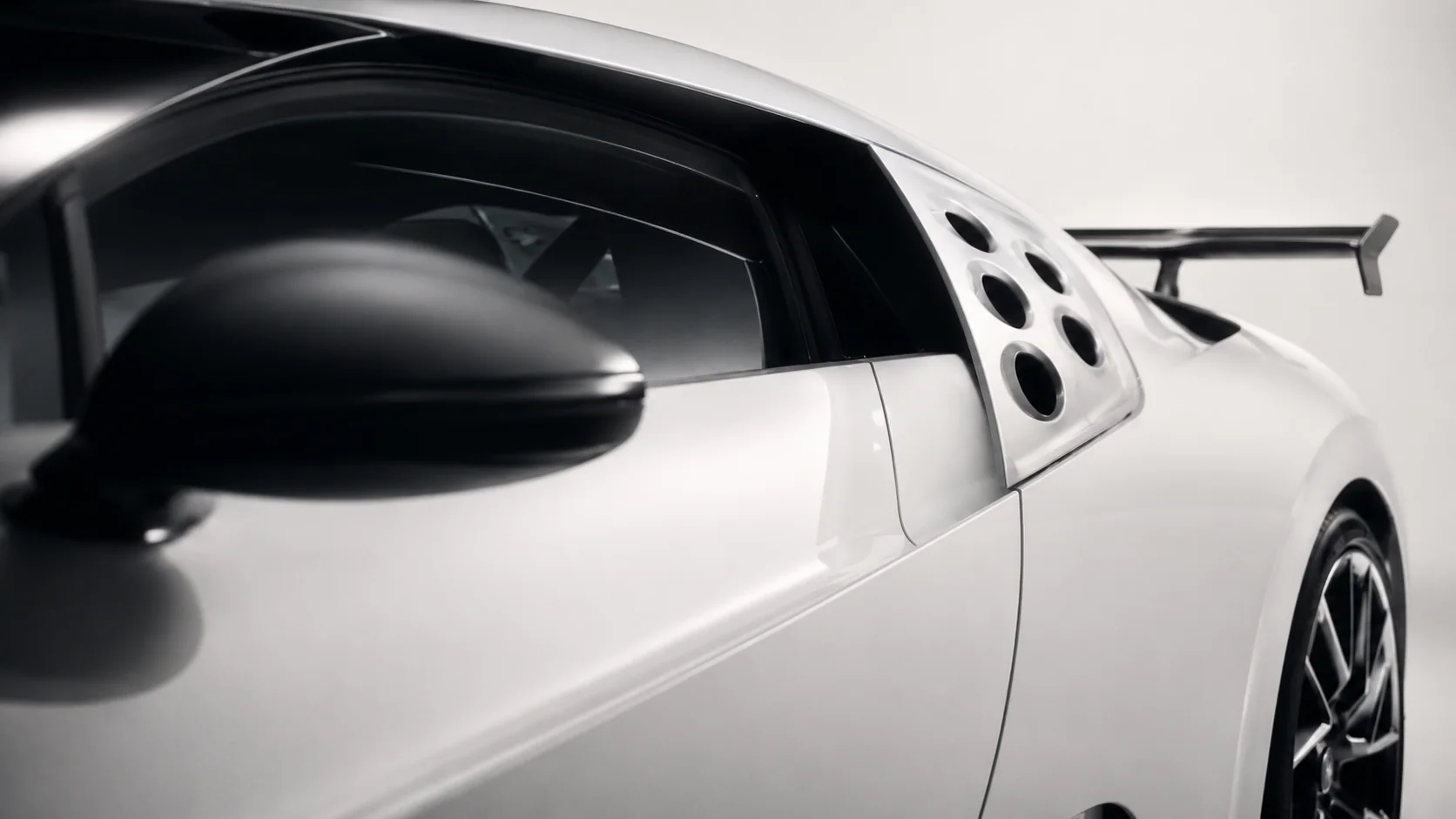
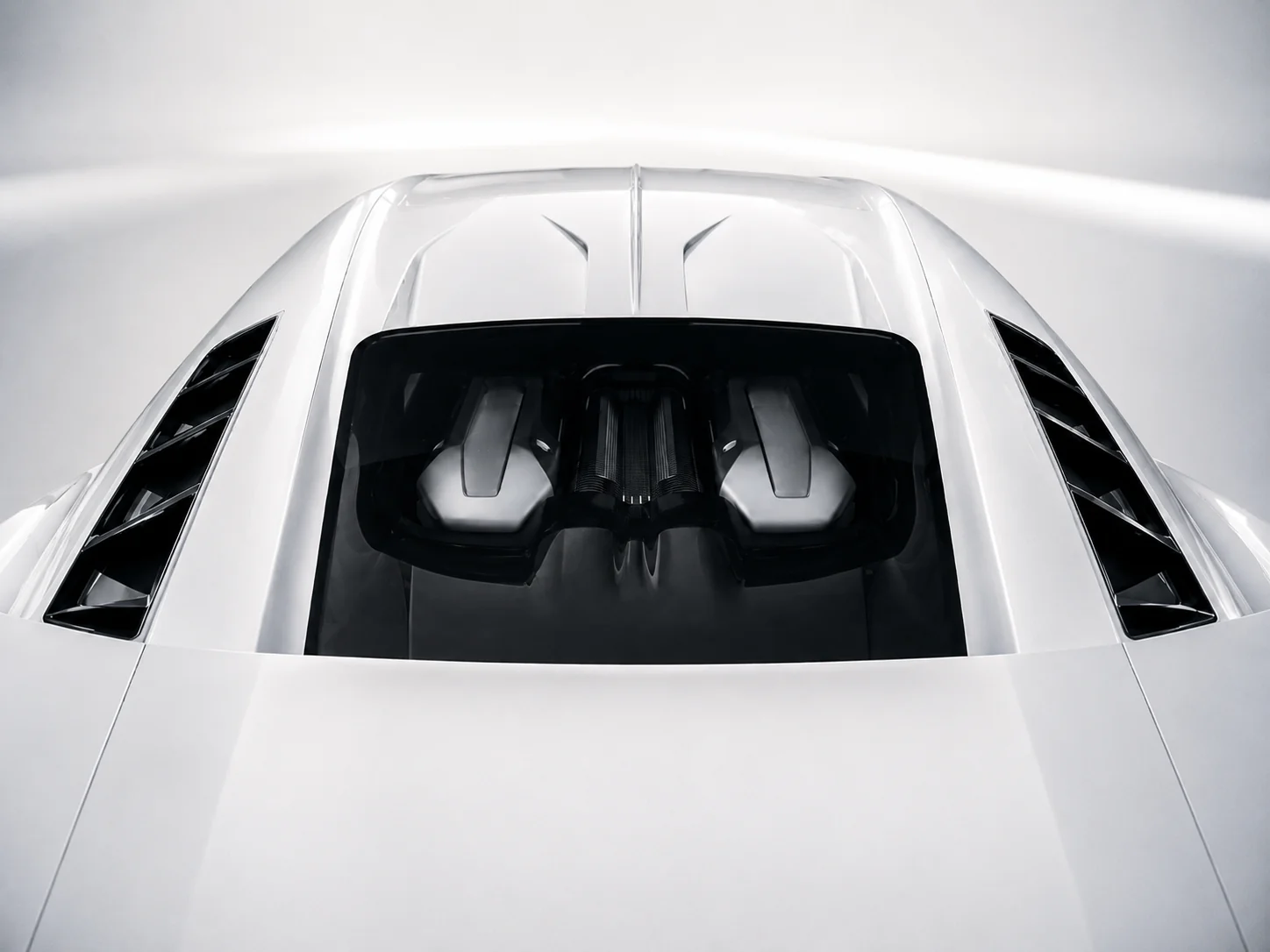
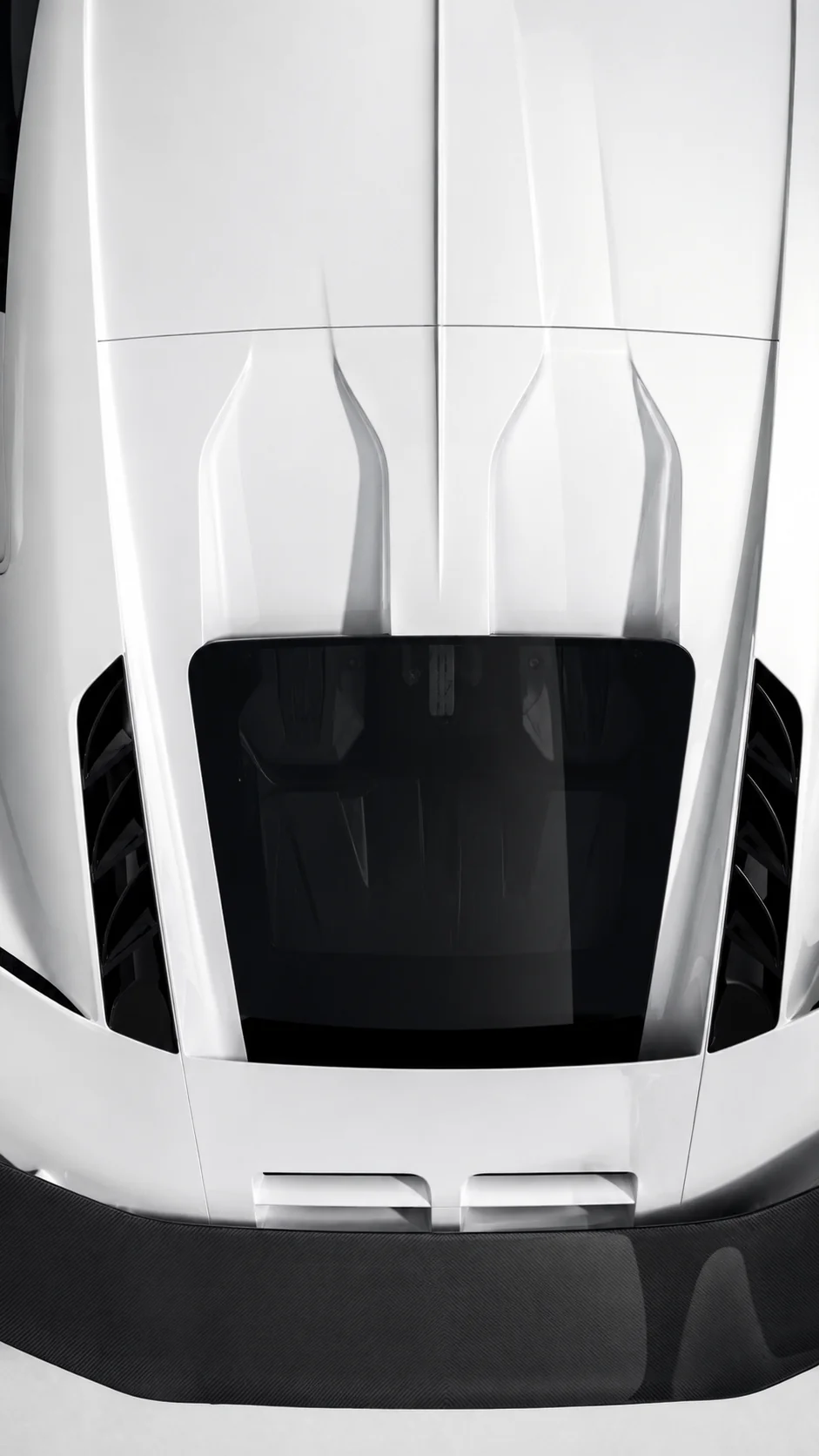
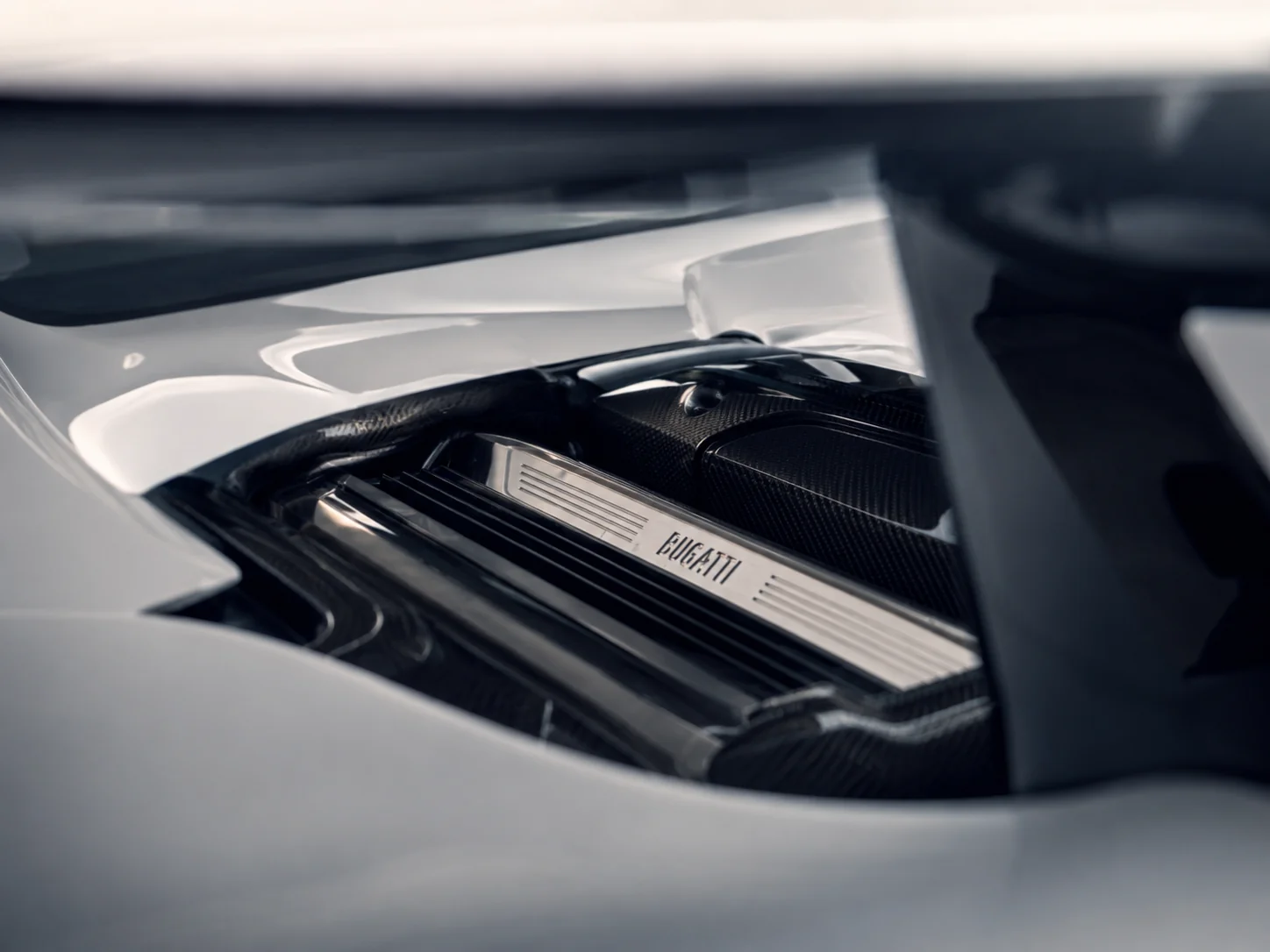
At the C-pillar, five circular intakes feed the engine bay, exactly as they did on the EB110 Super Sport, though here they answer to a W16 rather than a V12. Behind them, a glass panel leaves the engine on view, an EB110 signature carried forward.
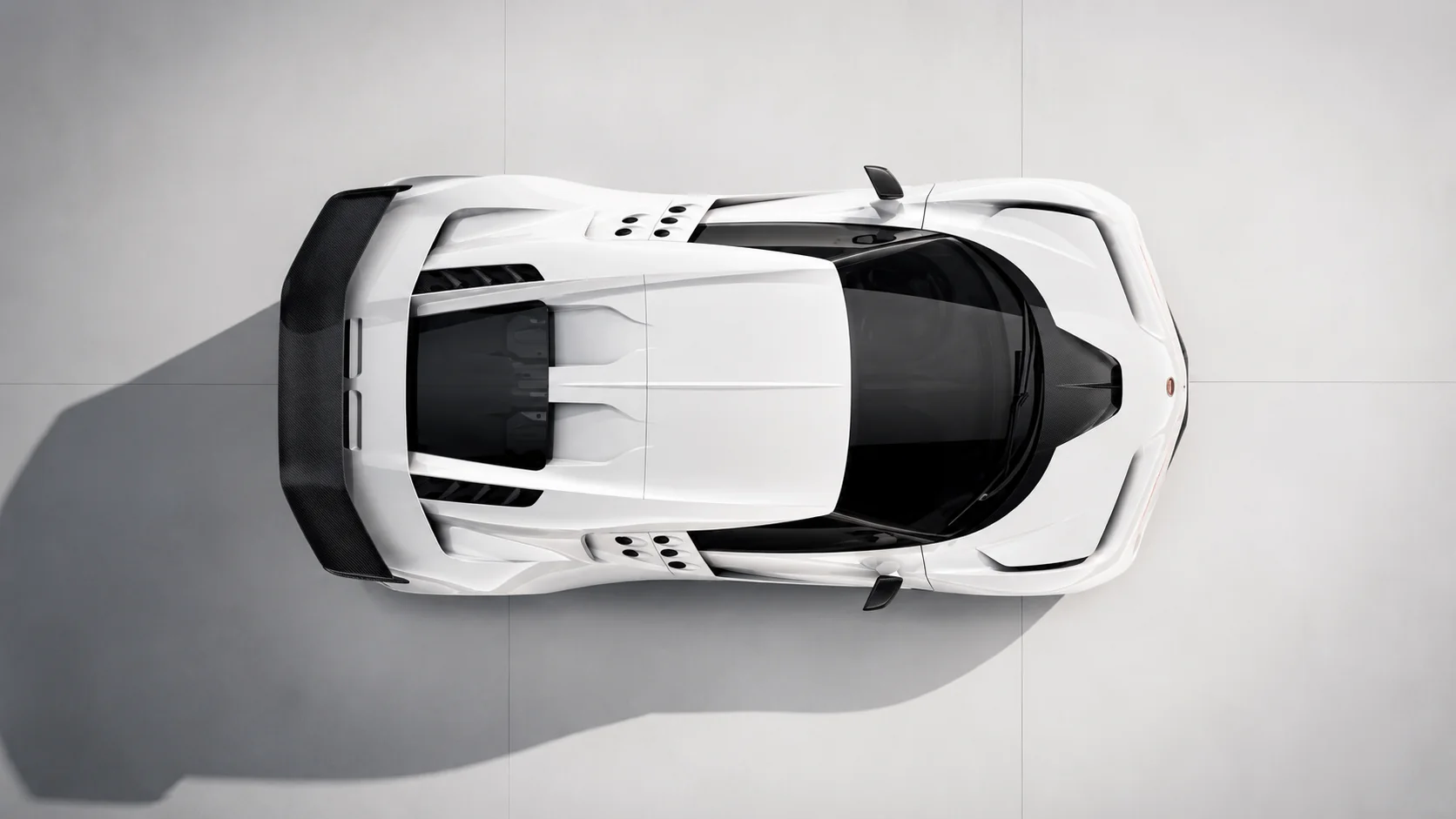
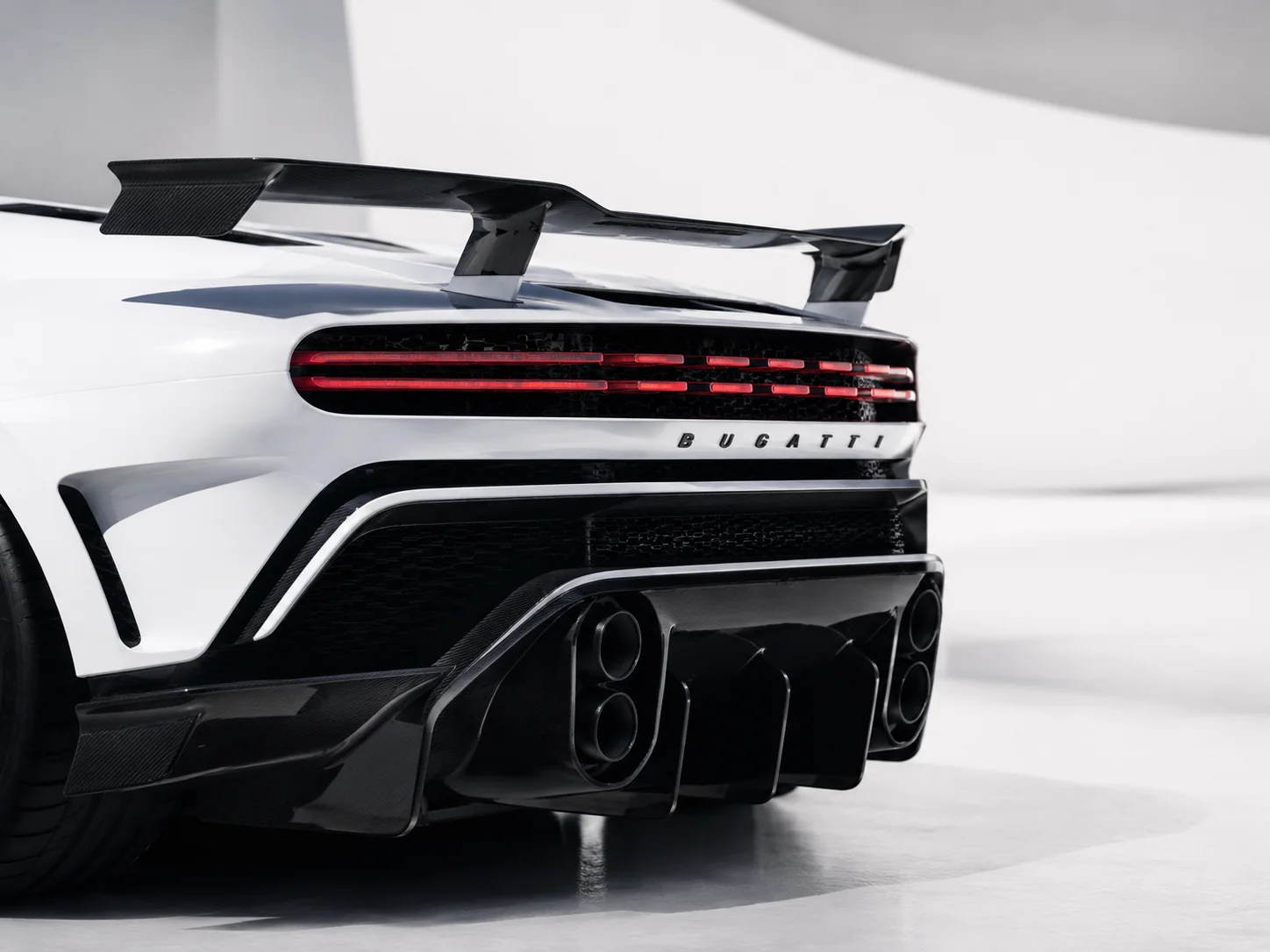
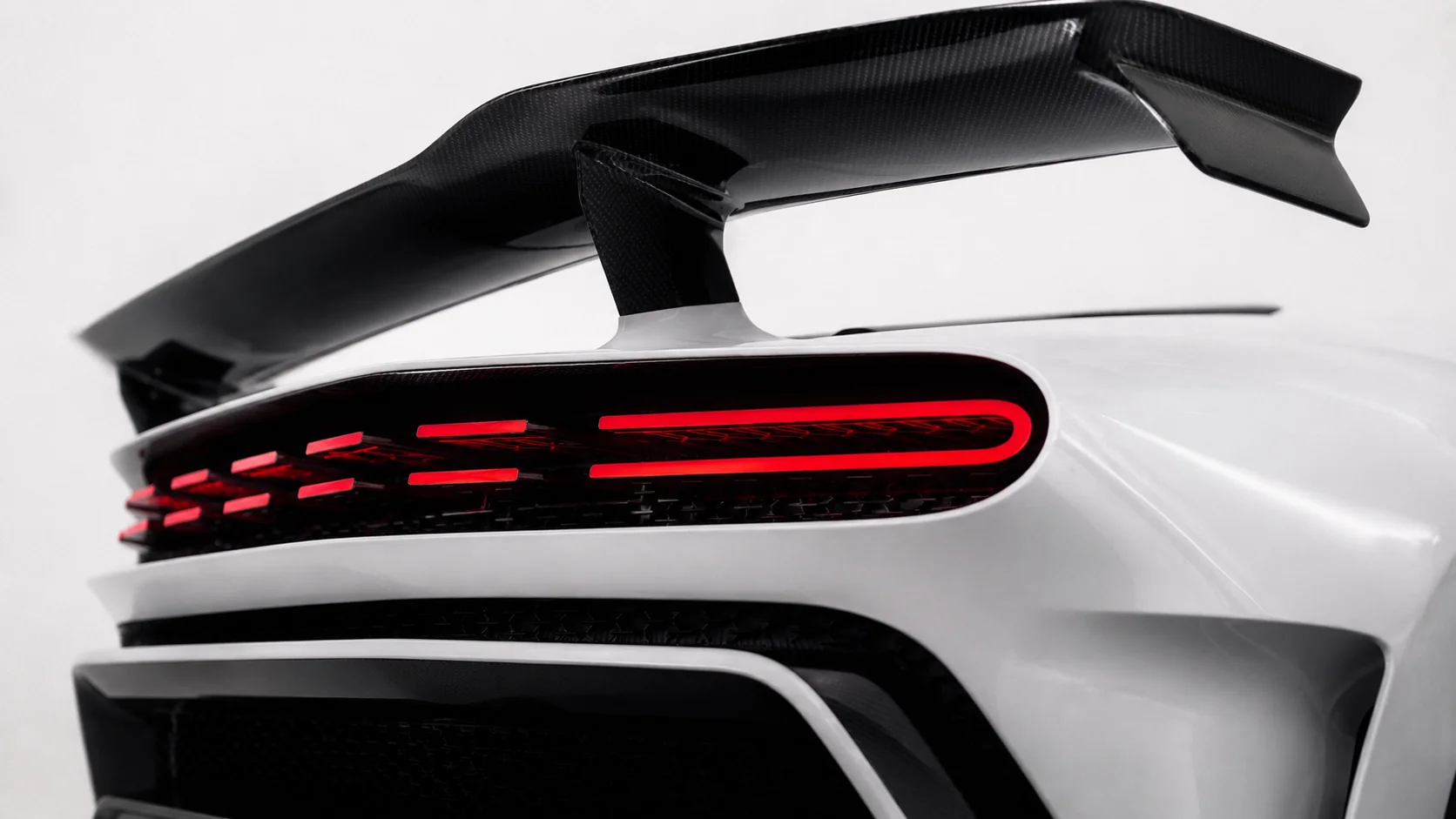
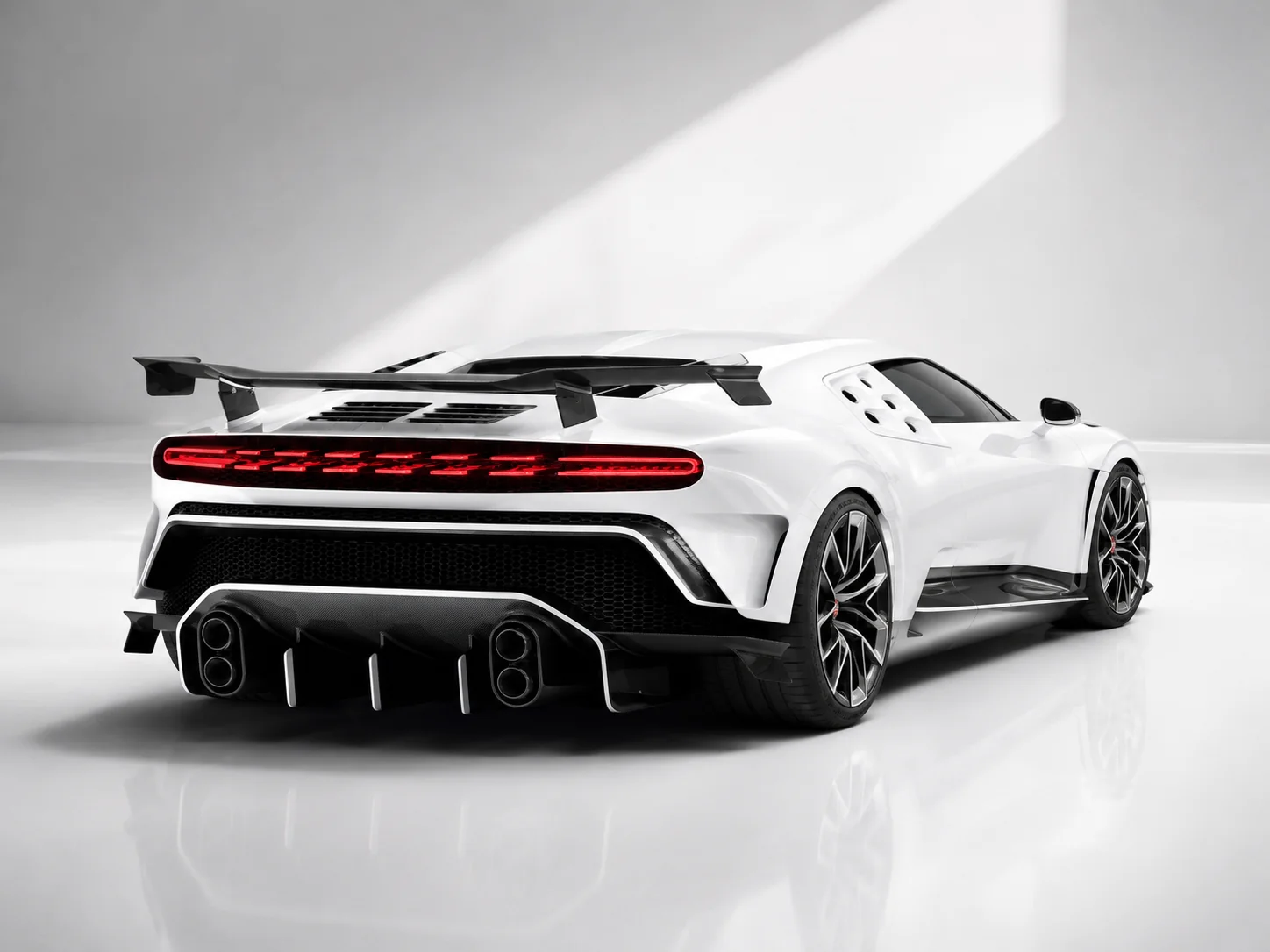
The rear wing is fixed, not active. A deliberate break from the Chiron, and a deliberate nod to the EB110 SS.
The Front, Lowered
Set close to the road, the EB110 in its stance.
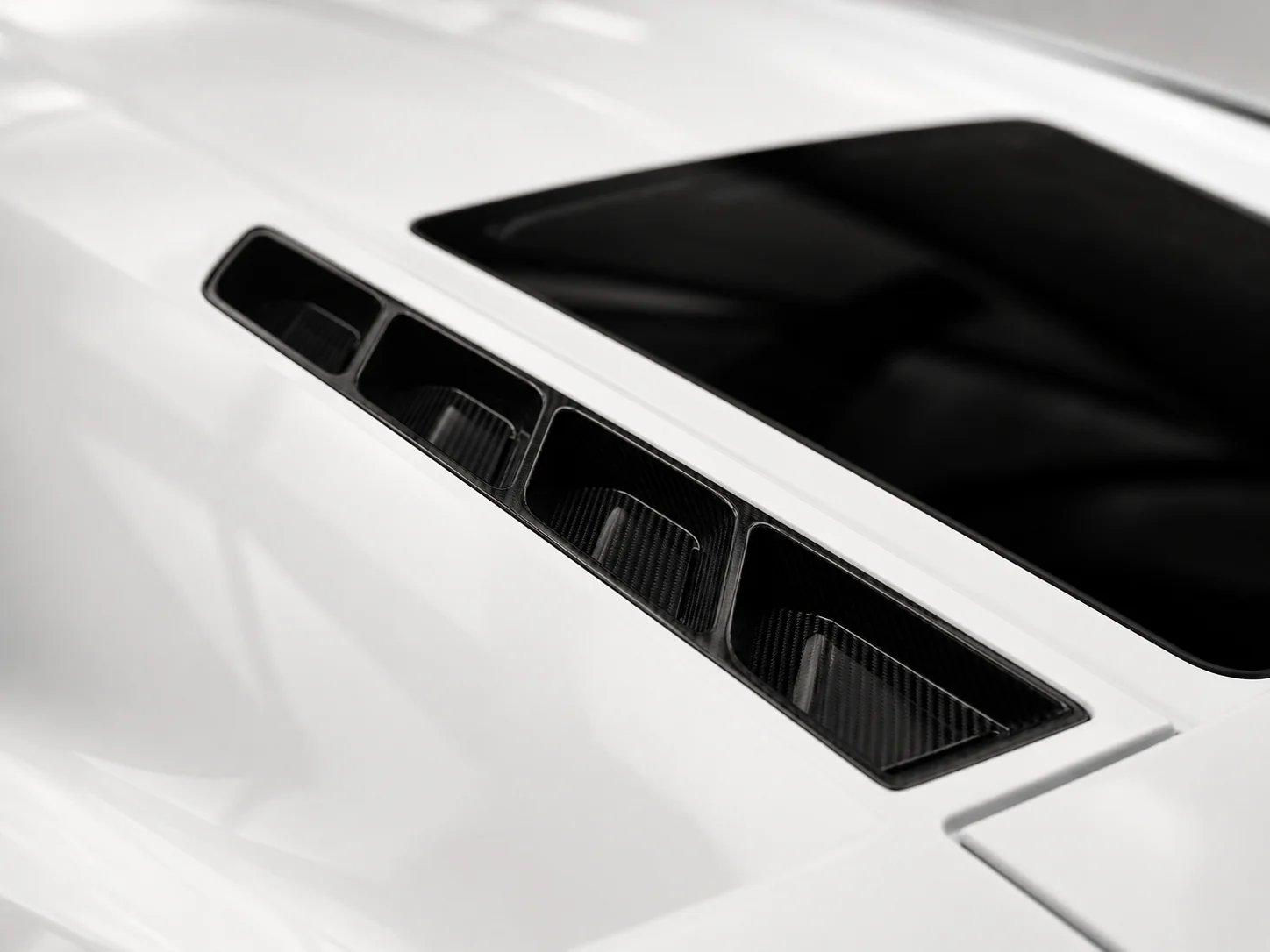
Five Ports, One Engine
Cooling for sixteen cylinders, worn openly.
The Engine
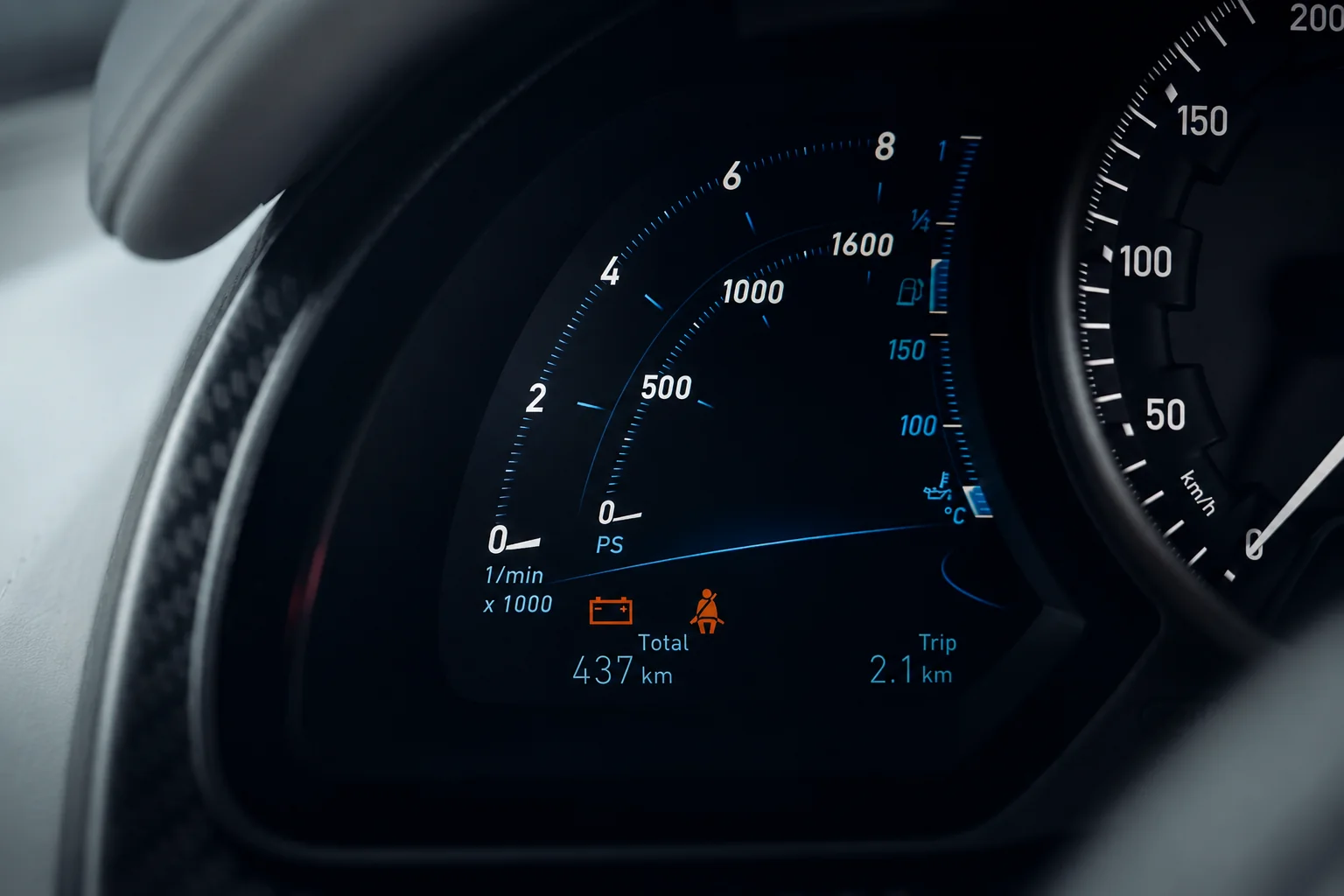
The Centodieci shares its foundation with the Chiron Super Sport: an 8.0-litre, quad-turbocharged W16. Here it is tuned tighter, roughly 100 PS beyond the standard Chiron, with peak power arriving high in the range.
Twenty kilograms lighter than its donor car, with revised steering and suspension calibration, it turns raw output into something a driver can place. The launch is violent; the delivery is not.
All of it reaches the road through a 7-speed dual-clutch gearbox and Bugatti's permanent all-wheel drive.
Hear the W16
Sixteen cylinders. Four turbochargers.
The Interior
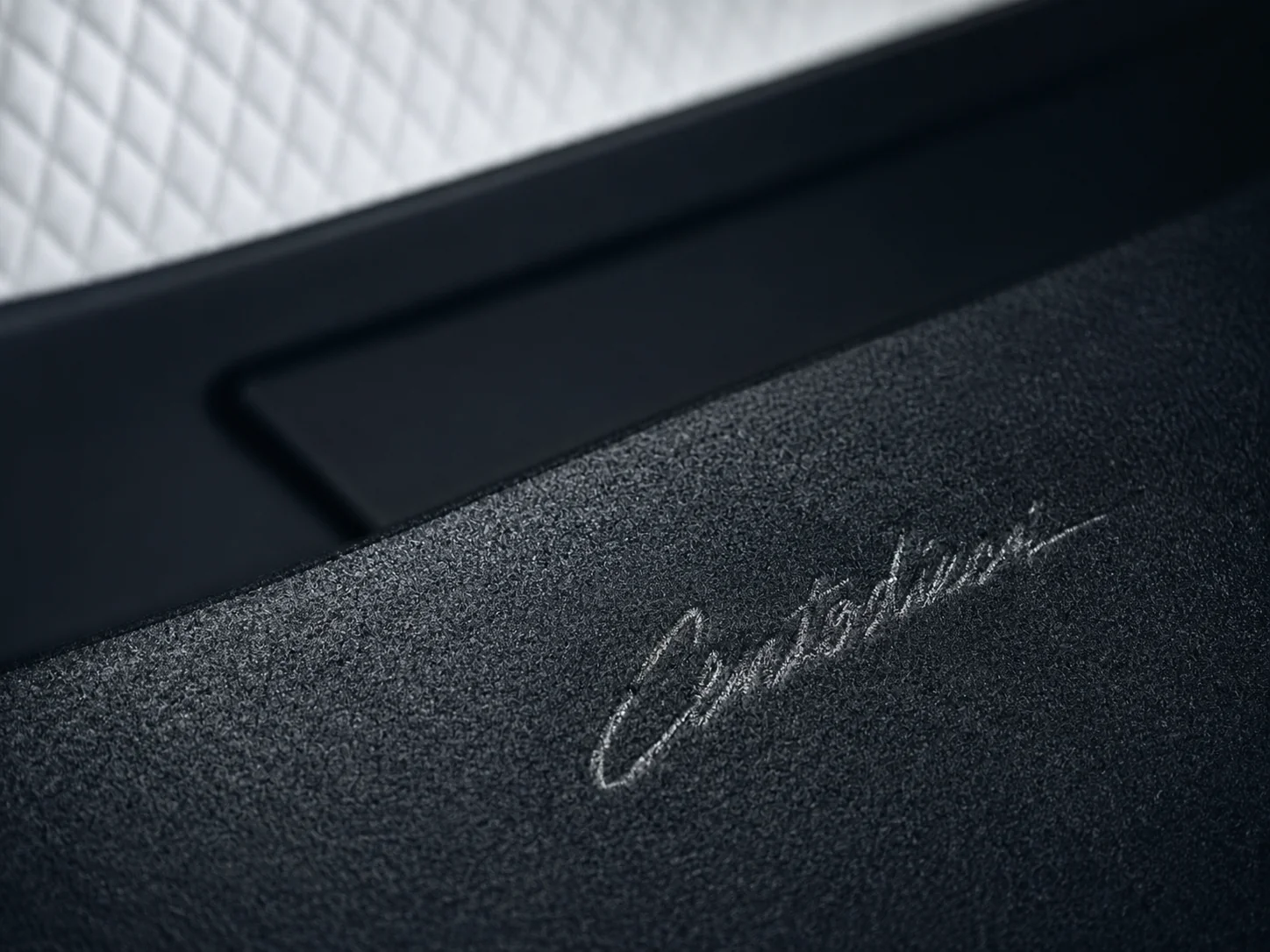
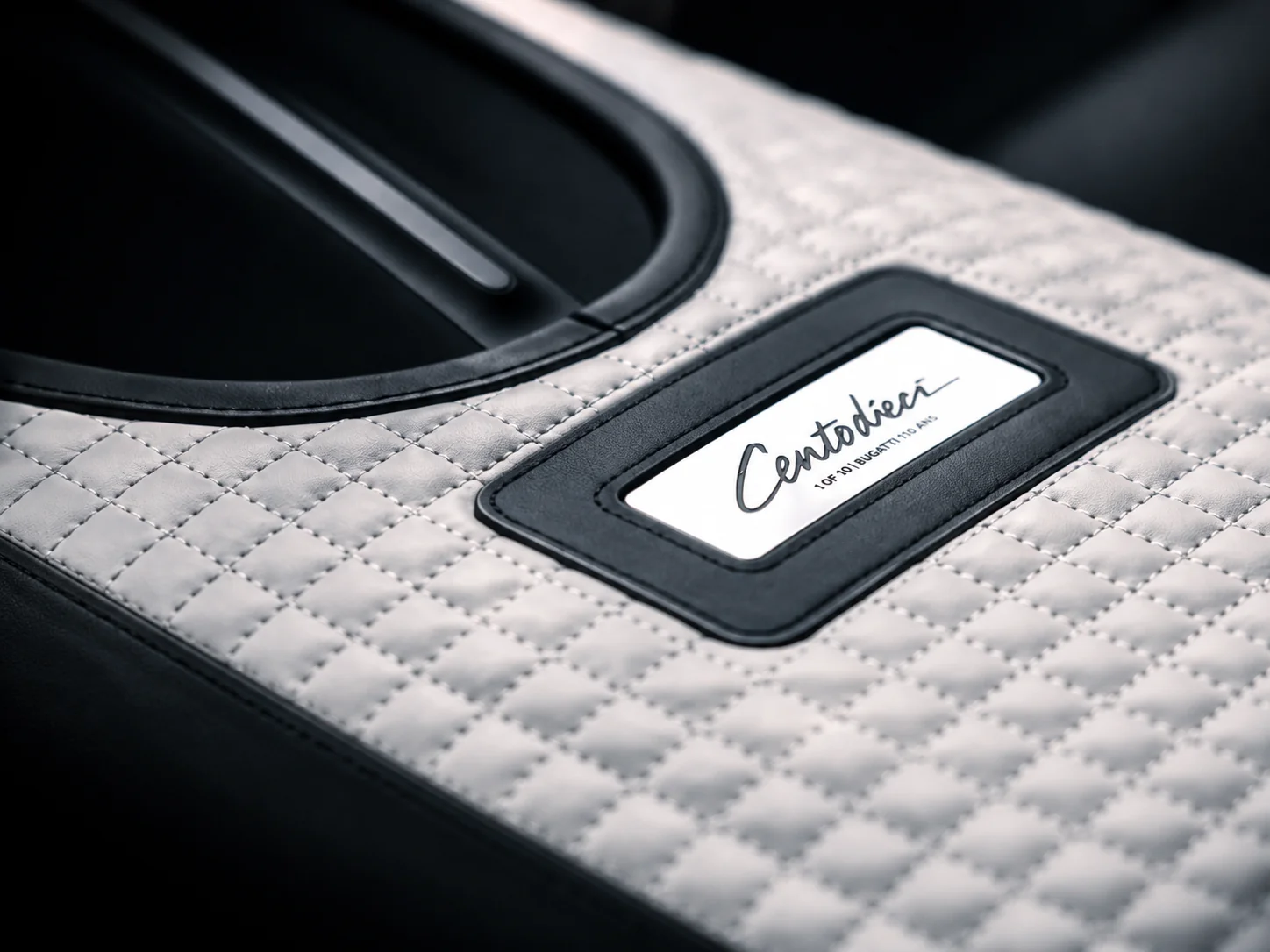
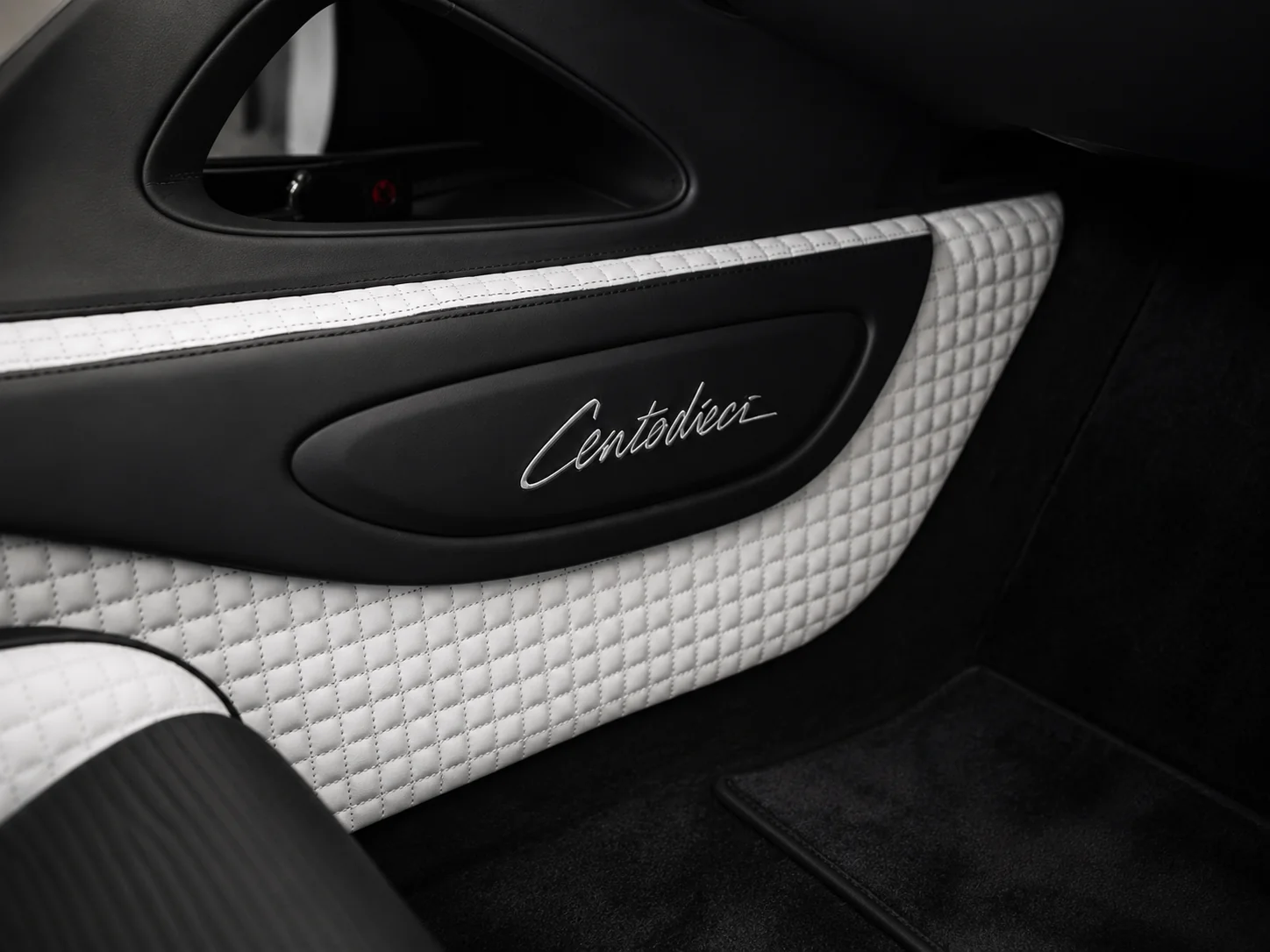
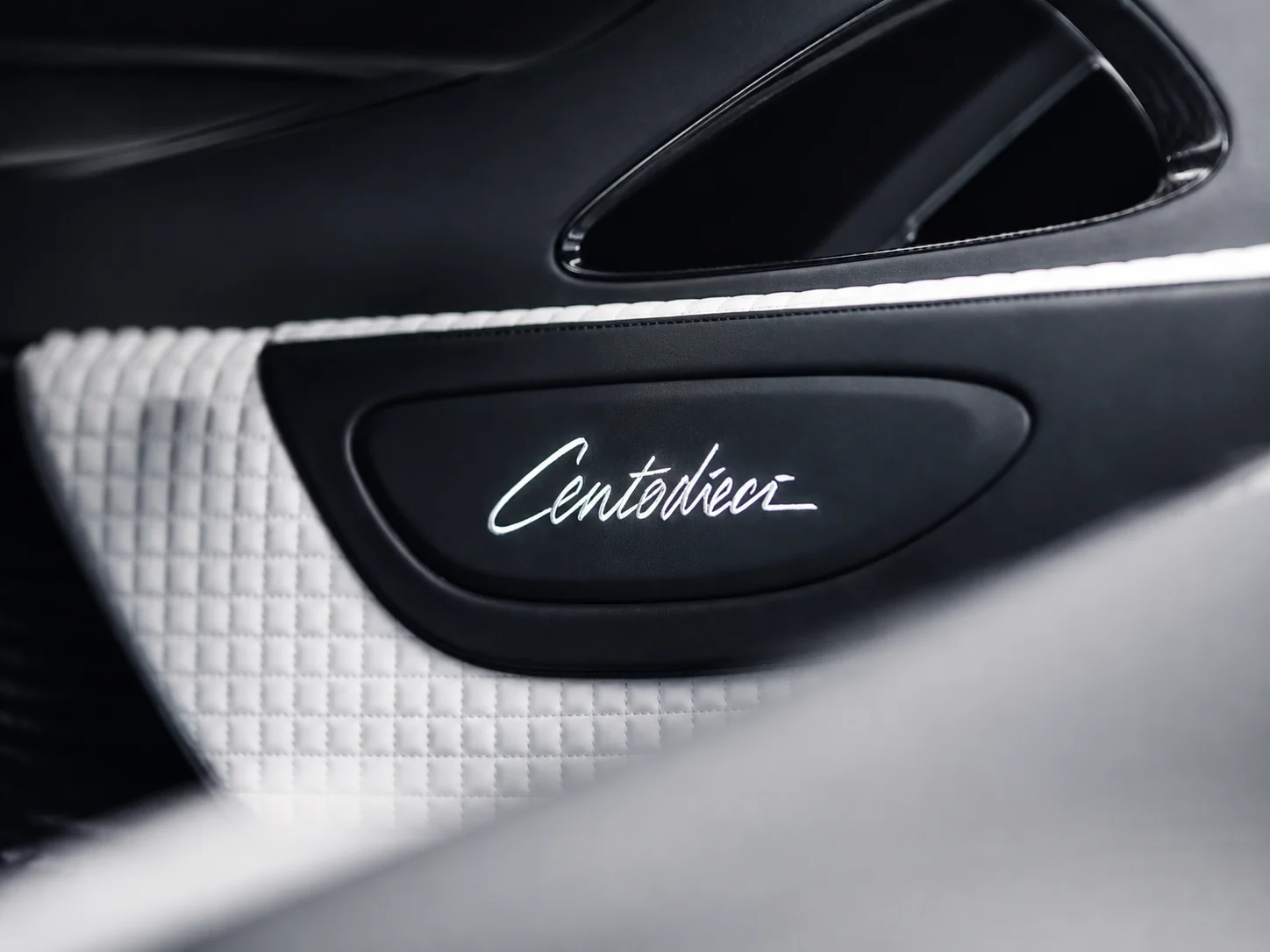
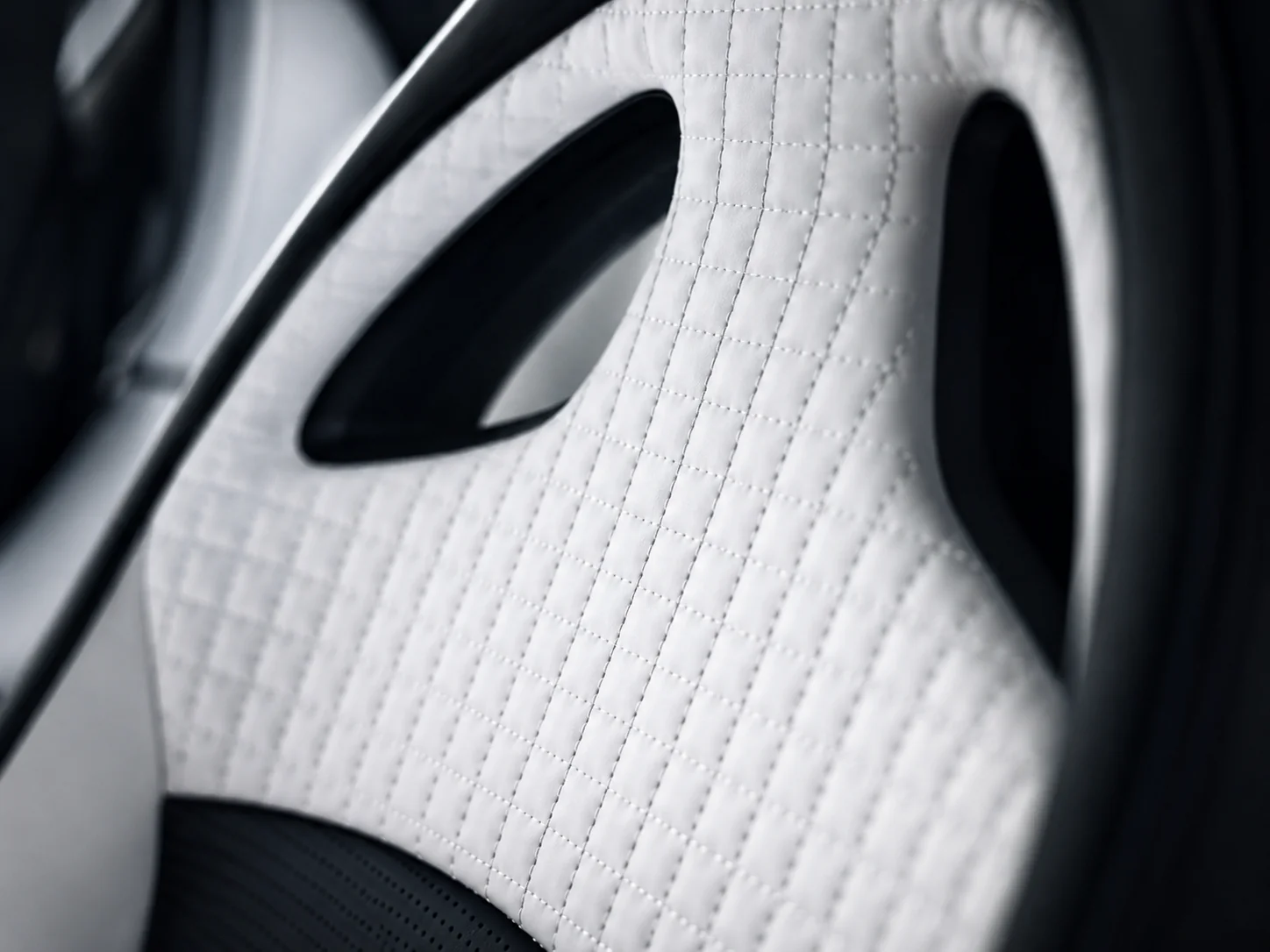
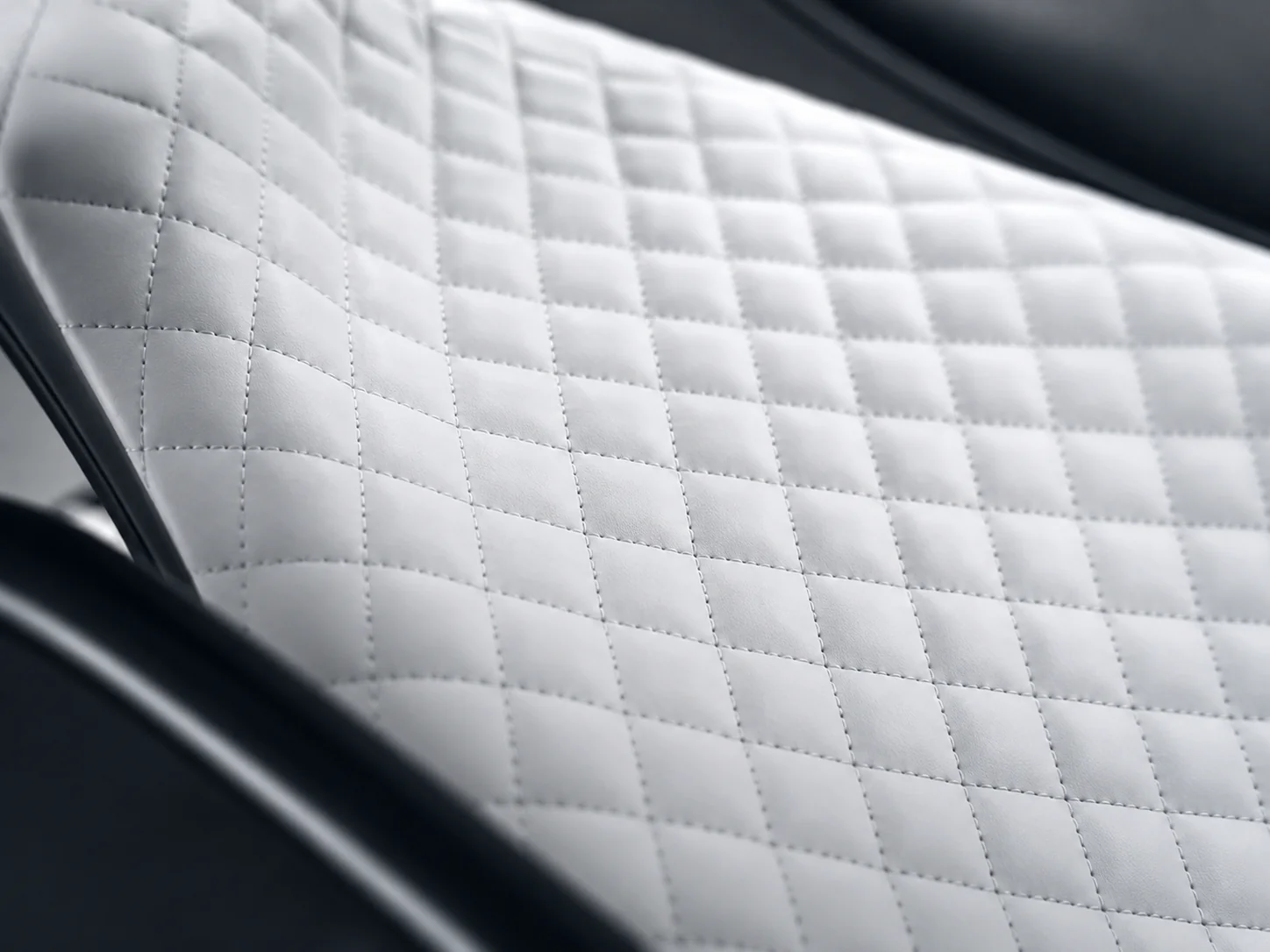
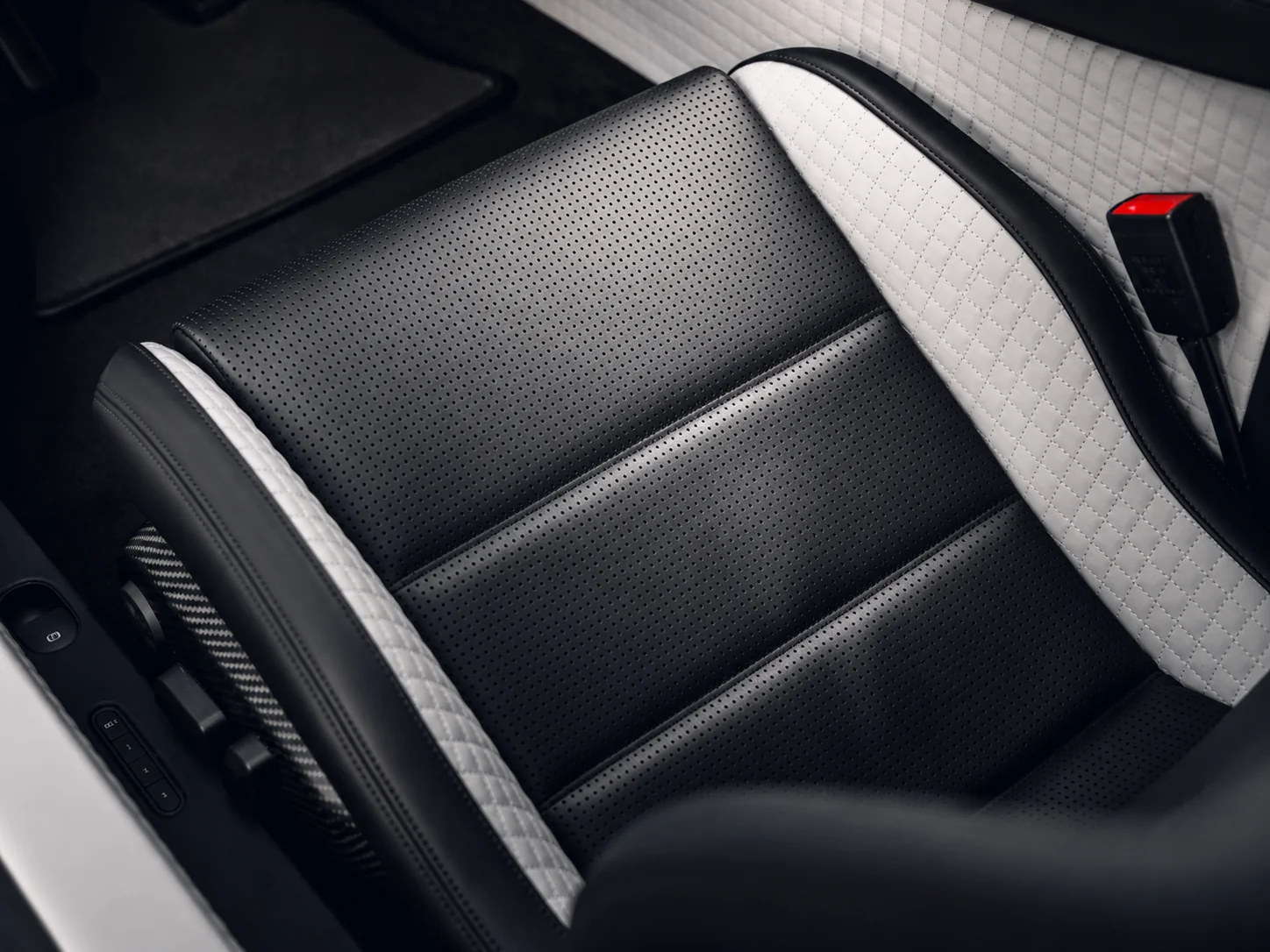
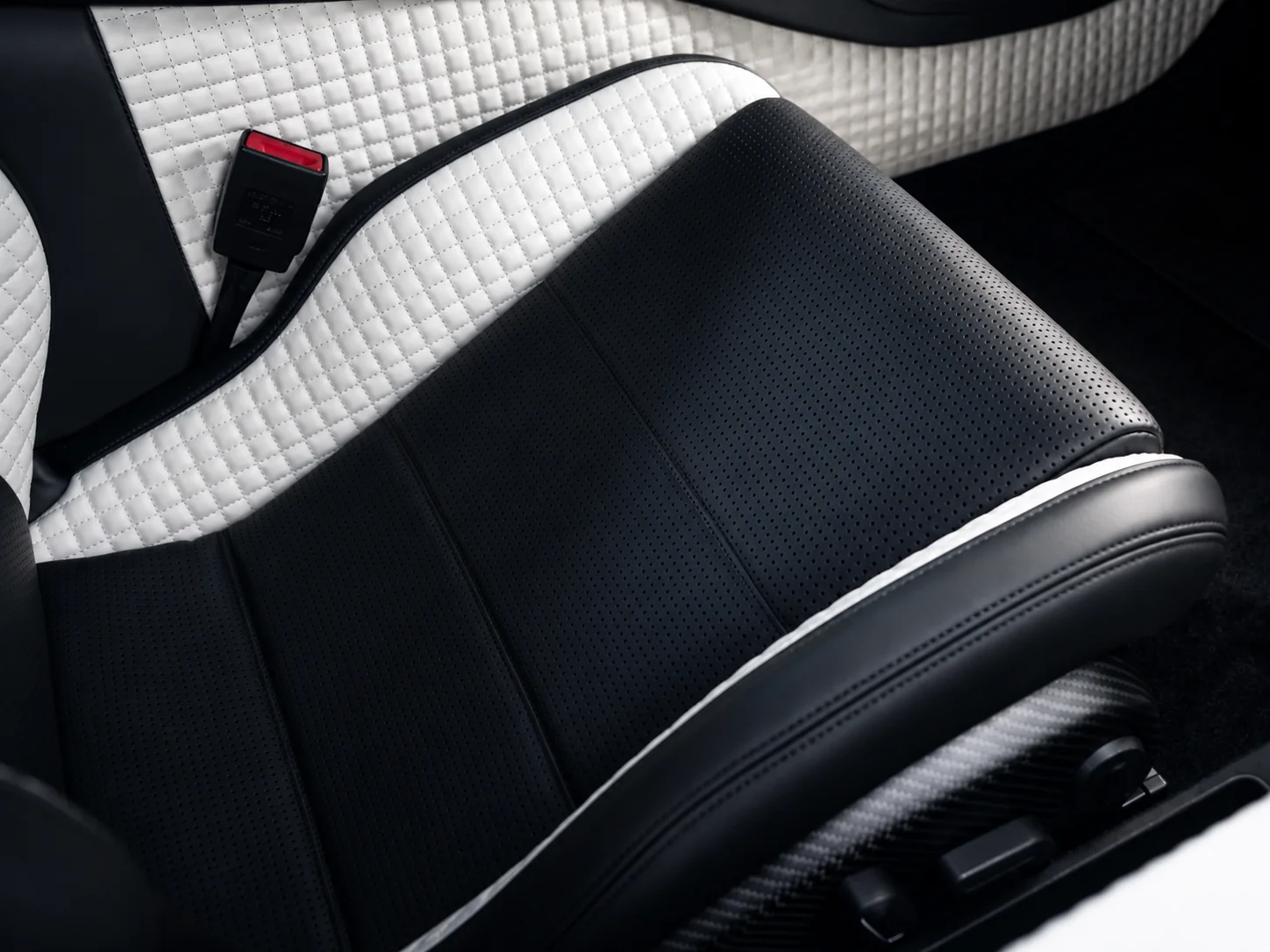
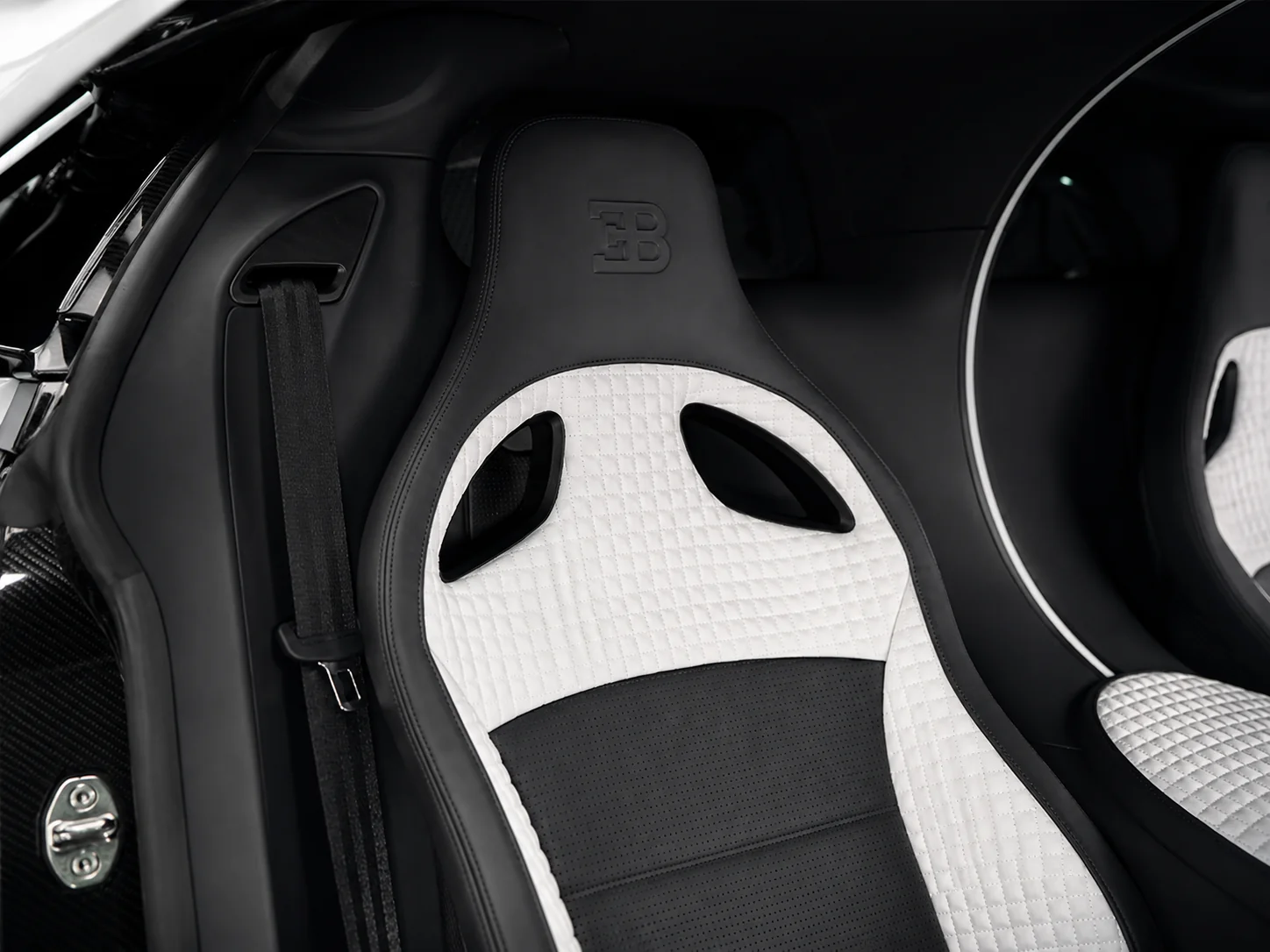
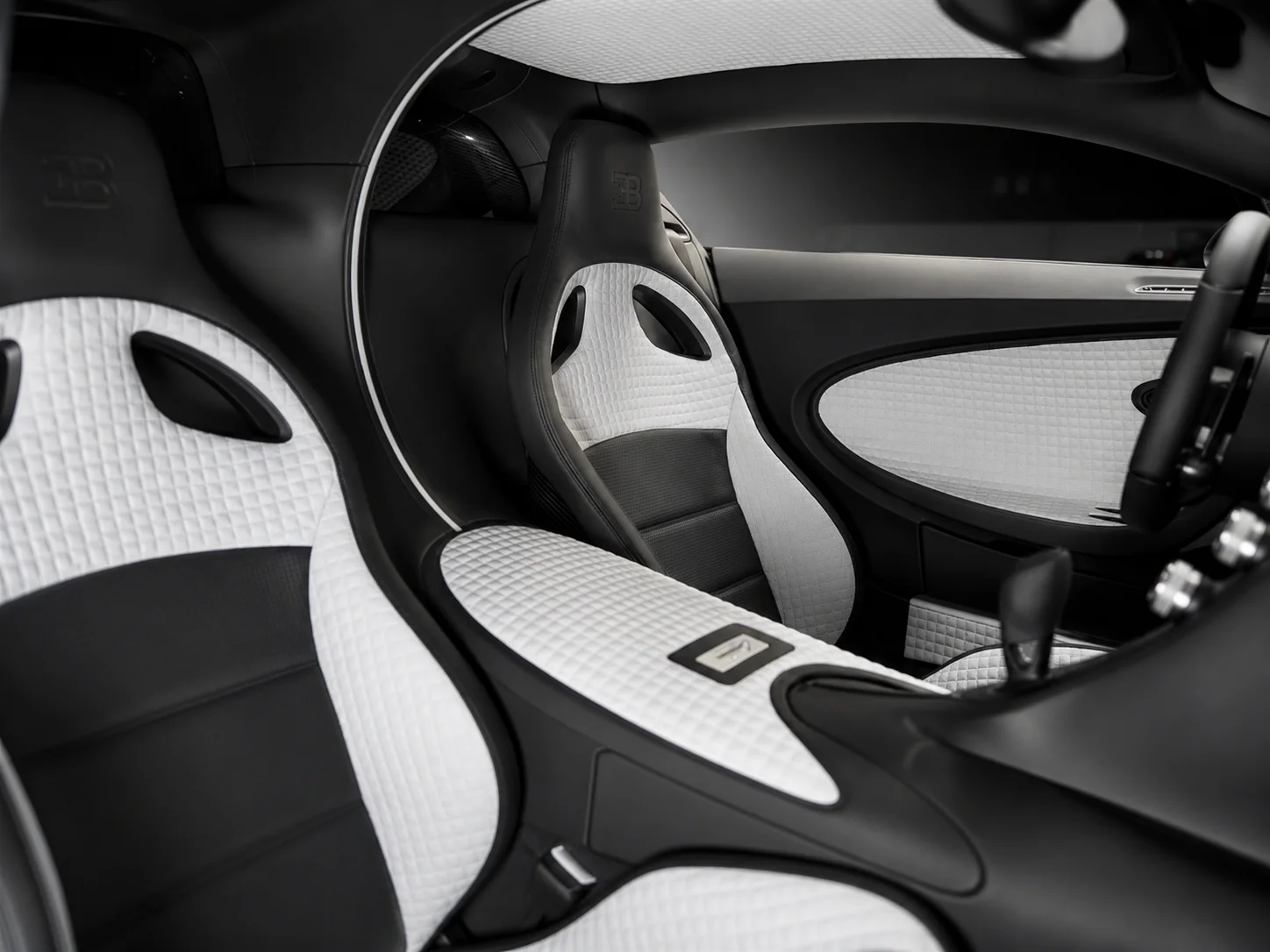
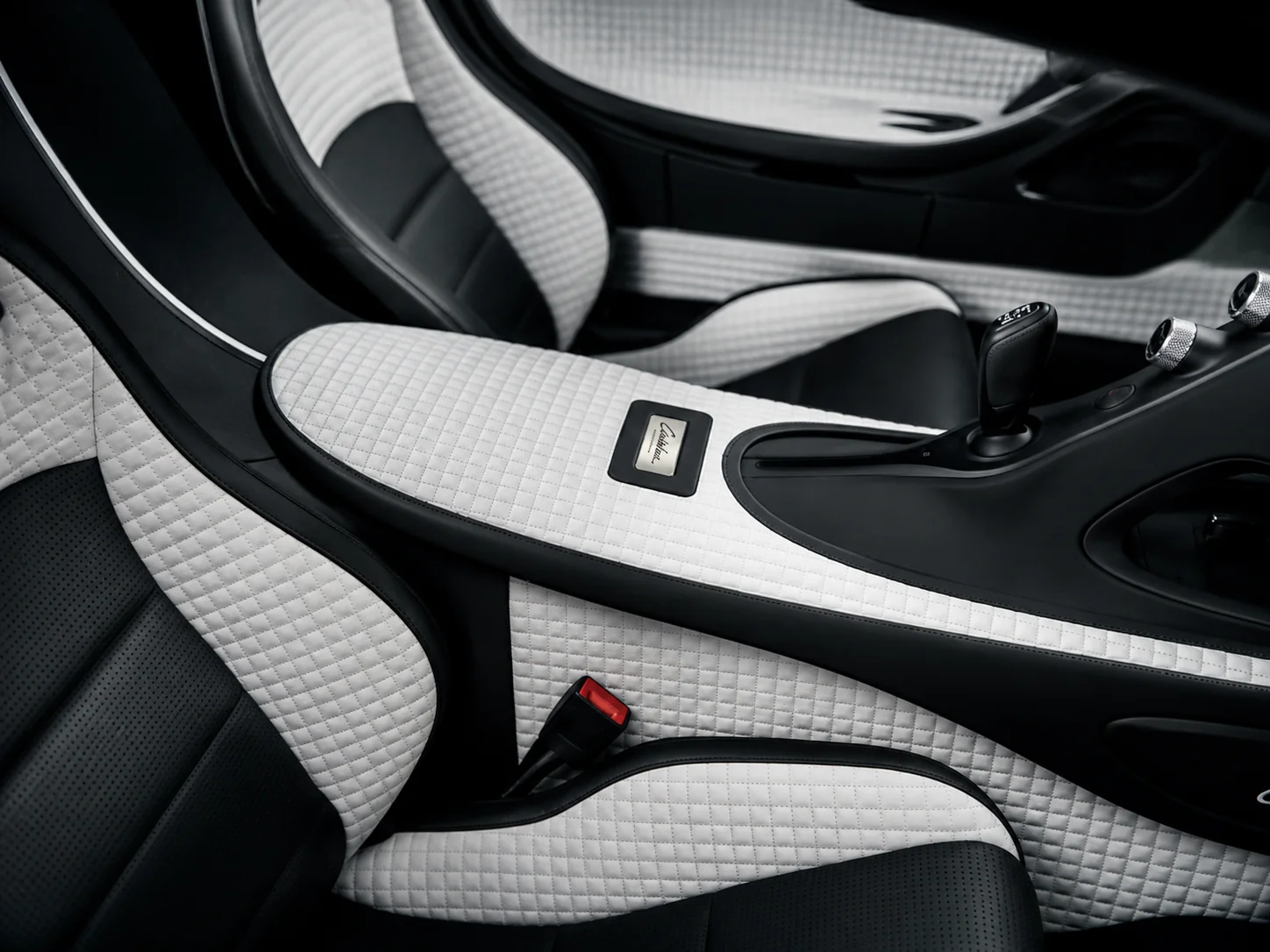
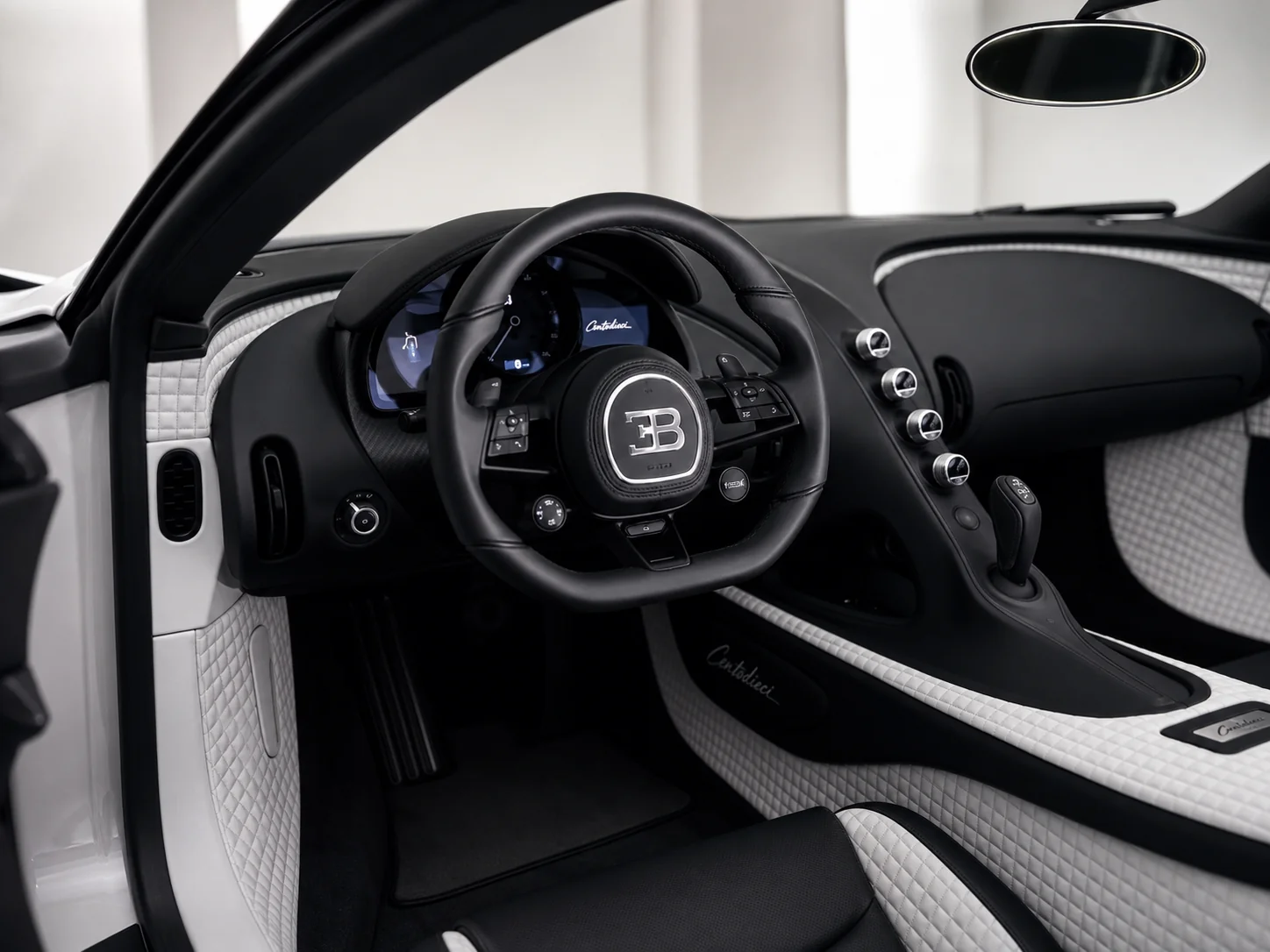
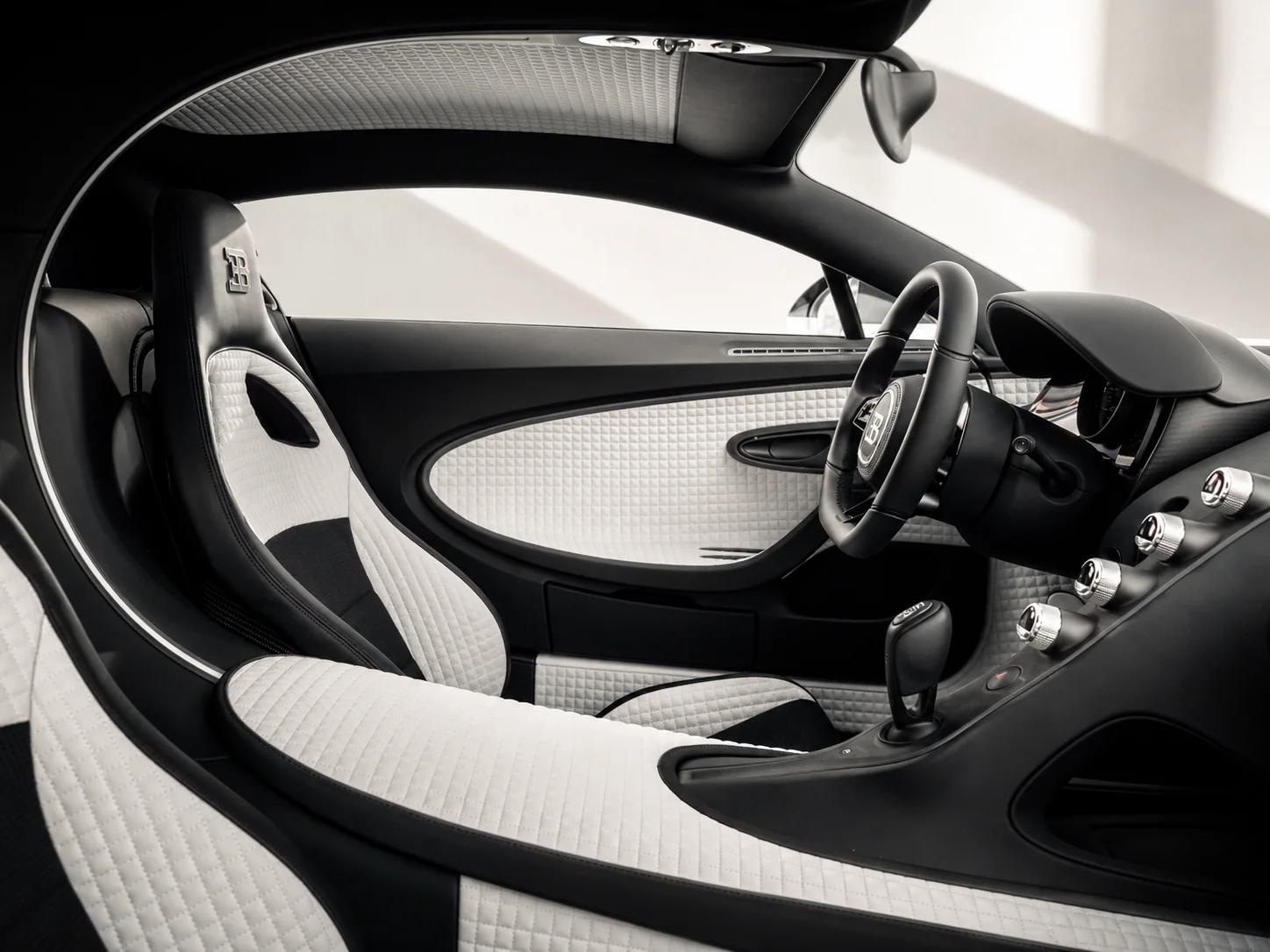
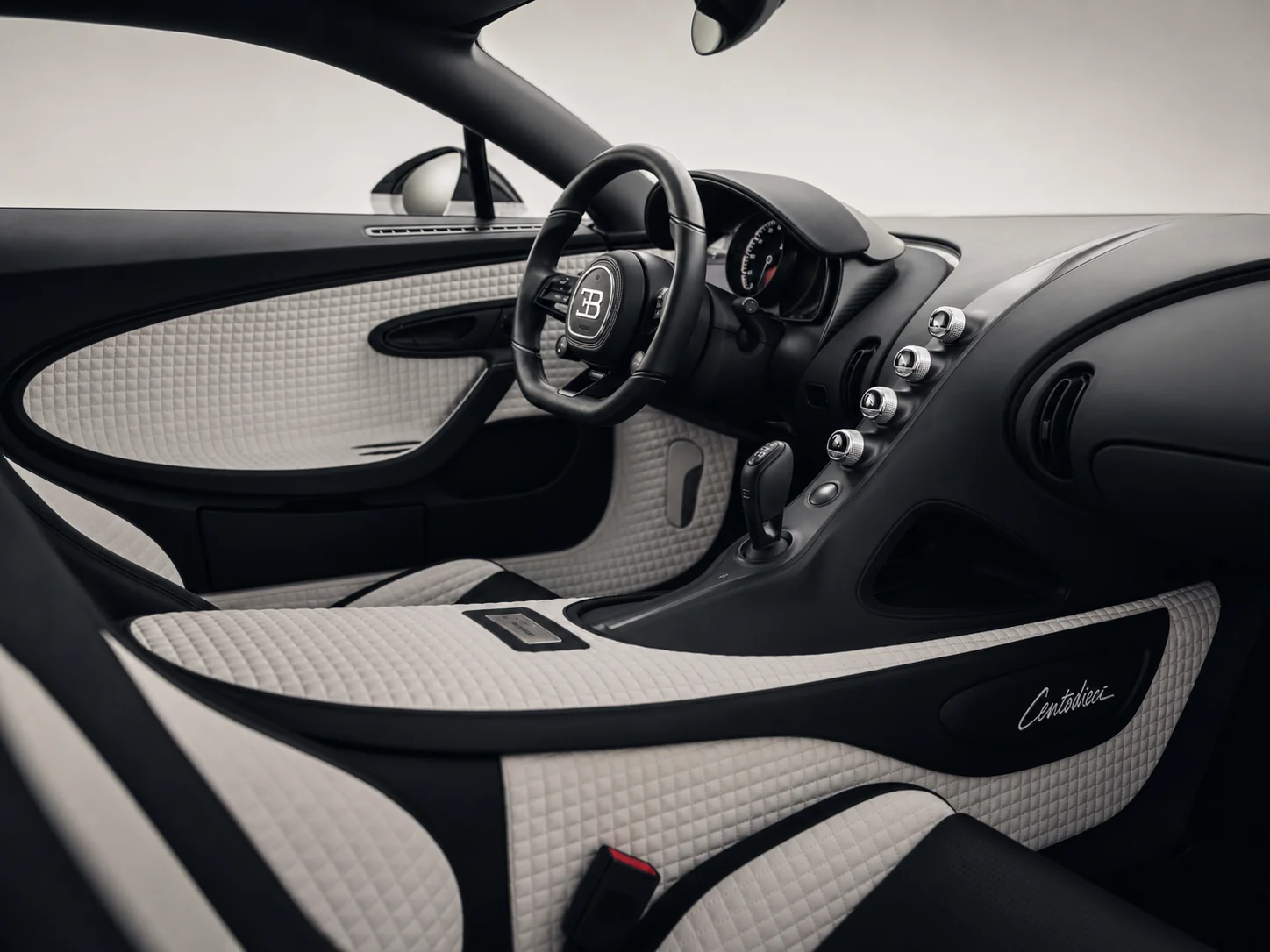
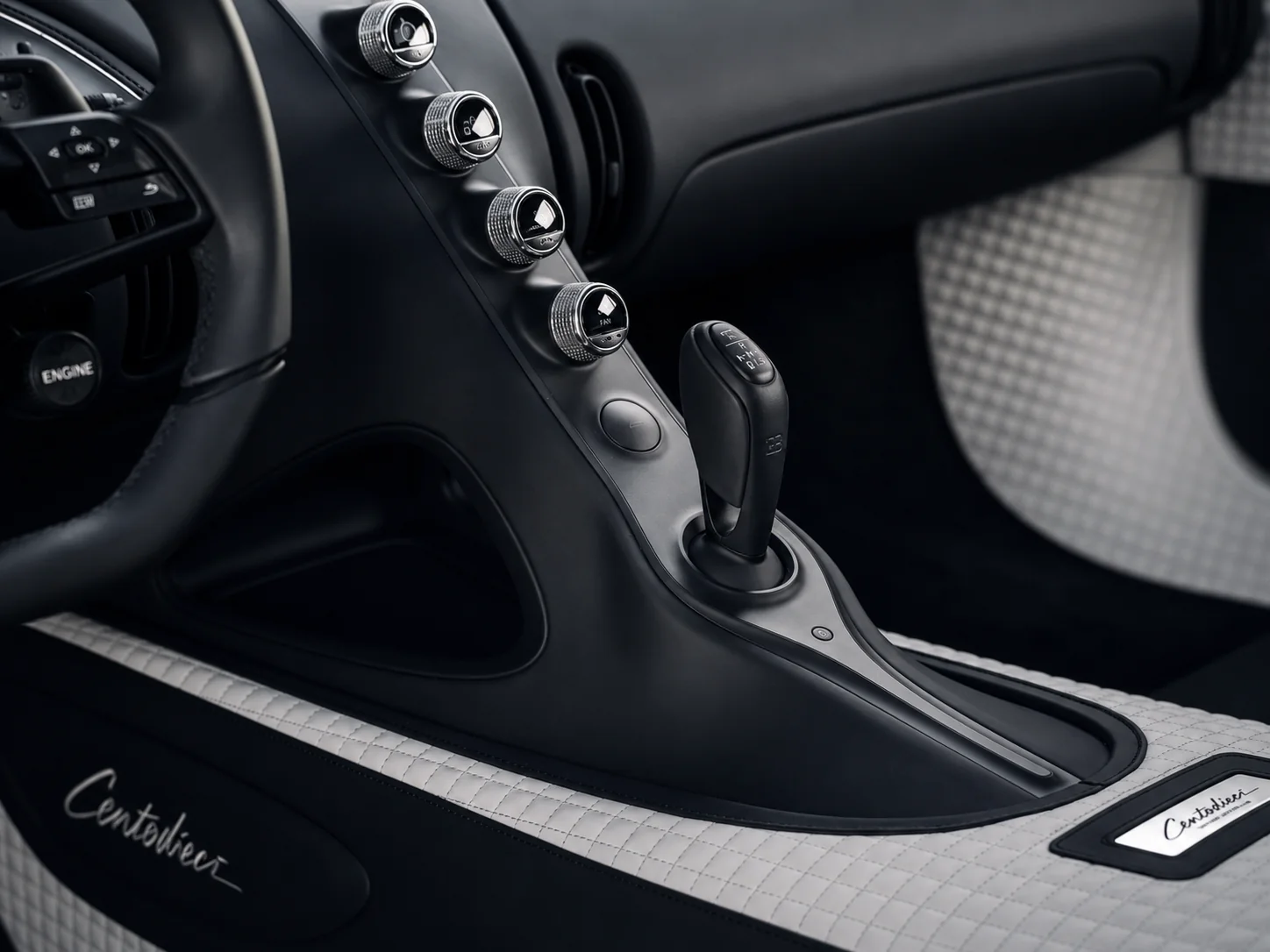
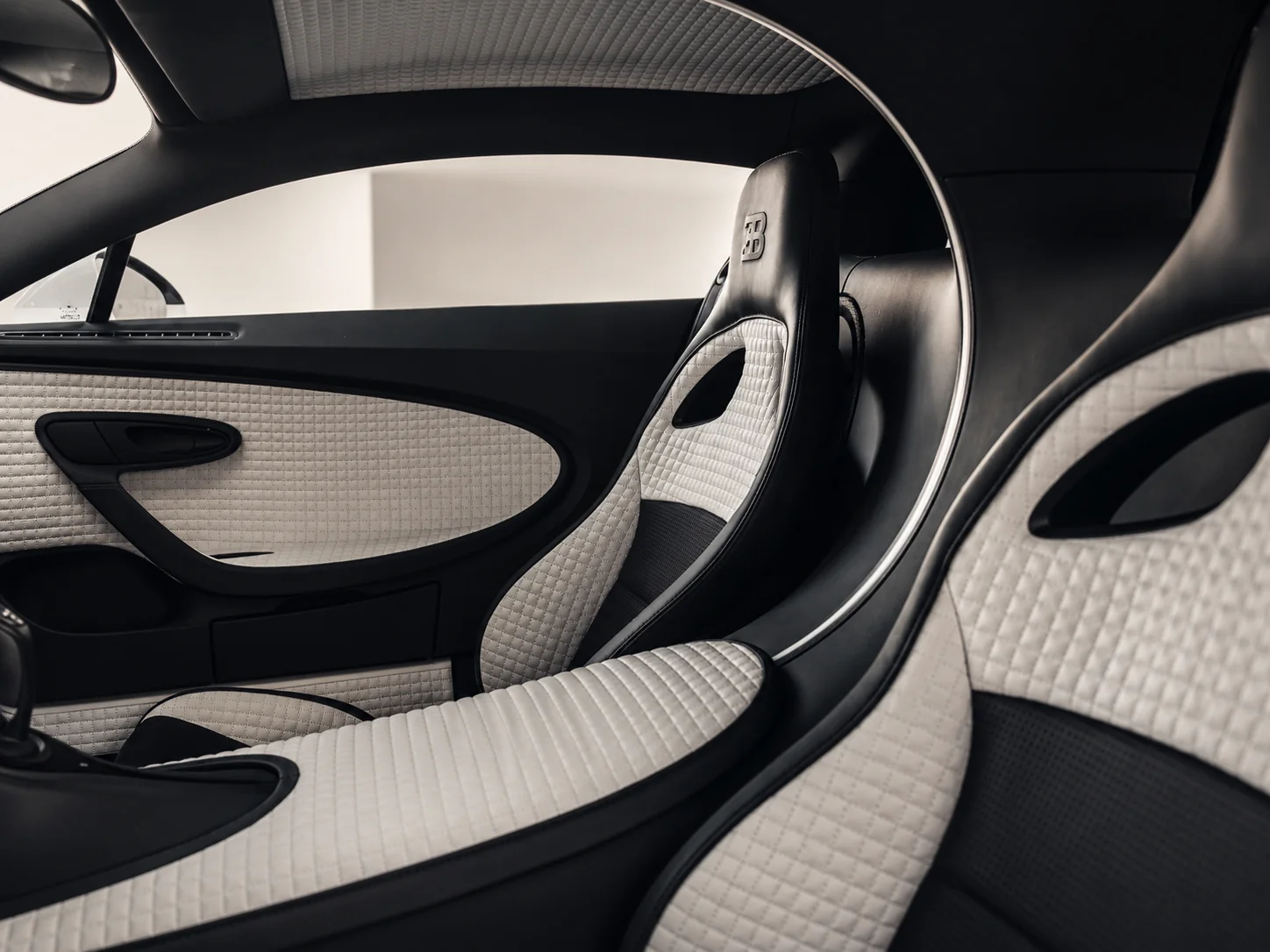
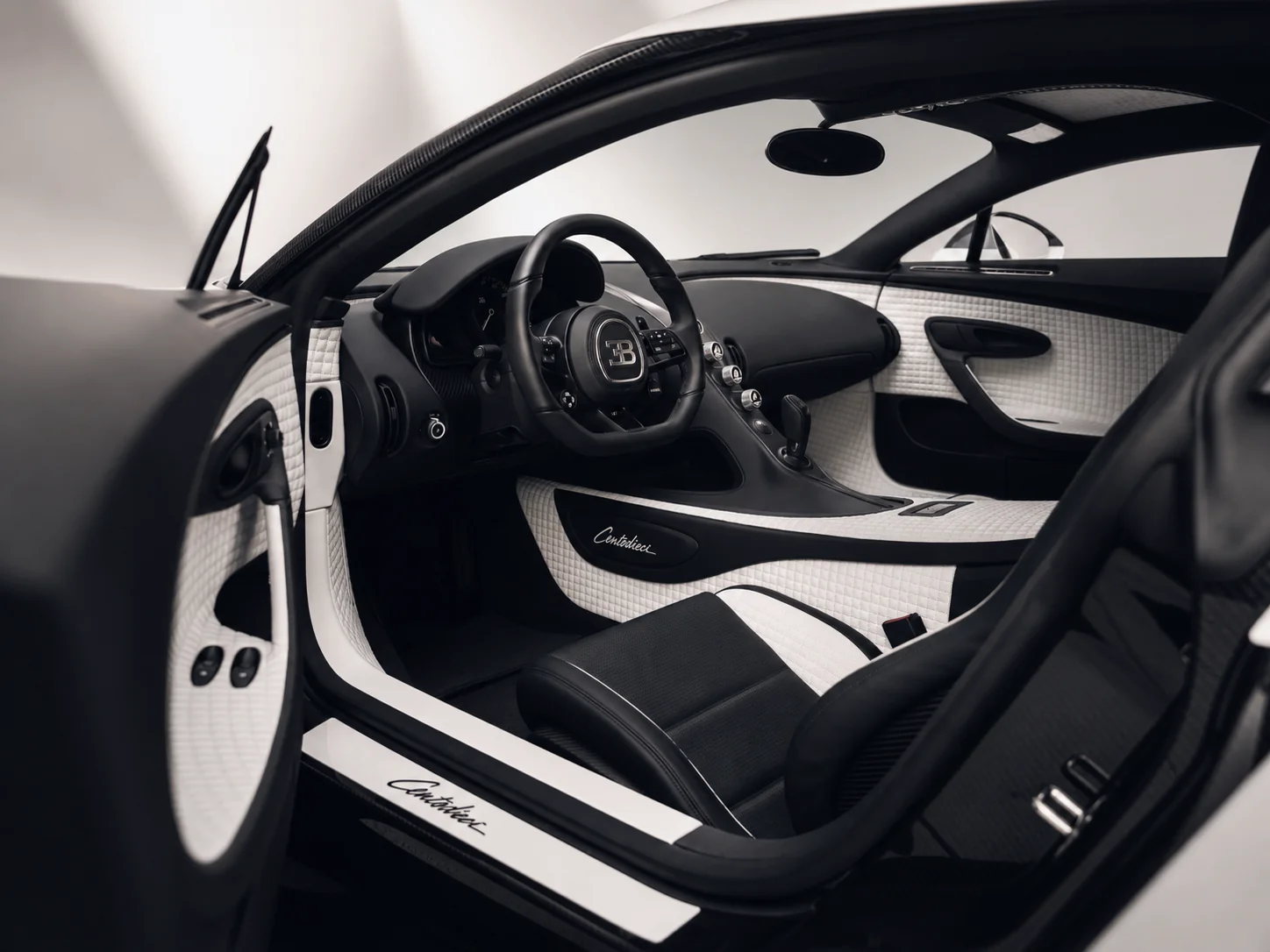
Inside, black and white leather, quilted by hand at the Molsheim atelier in a diamond pattern that runs across the seats, the door panels, and the centre console.
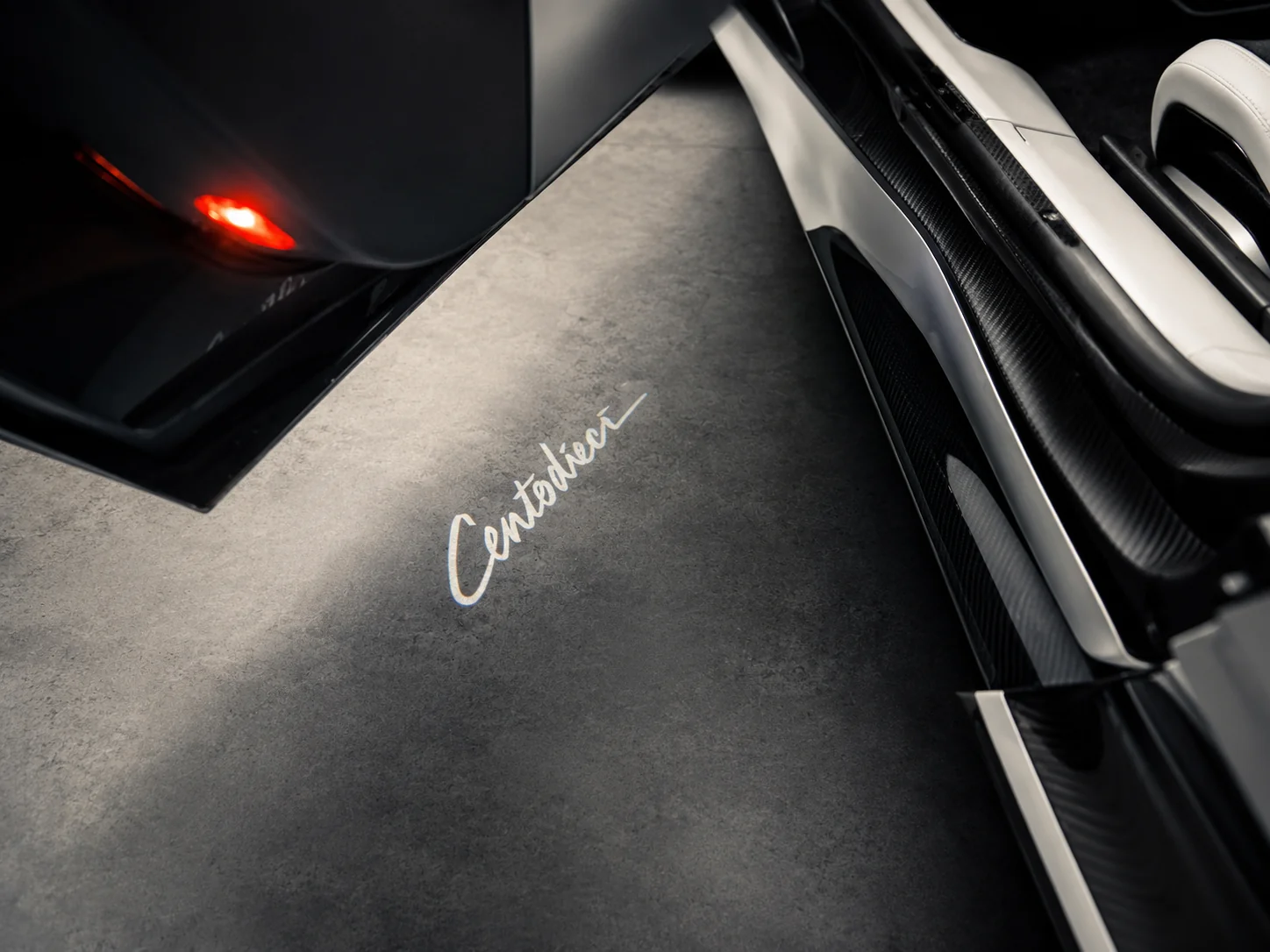
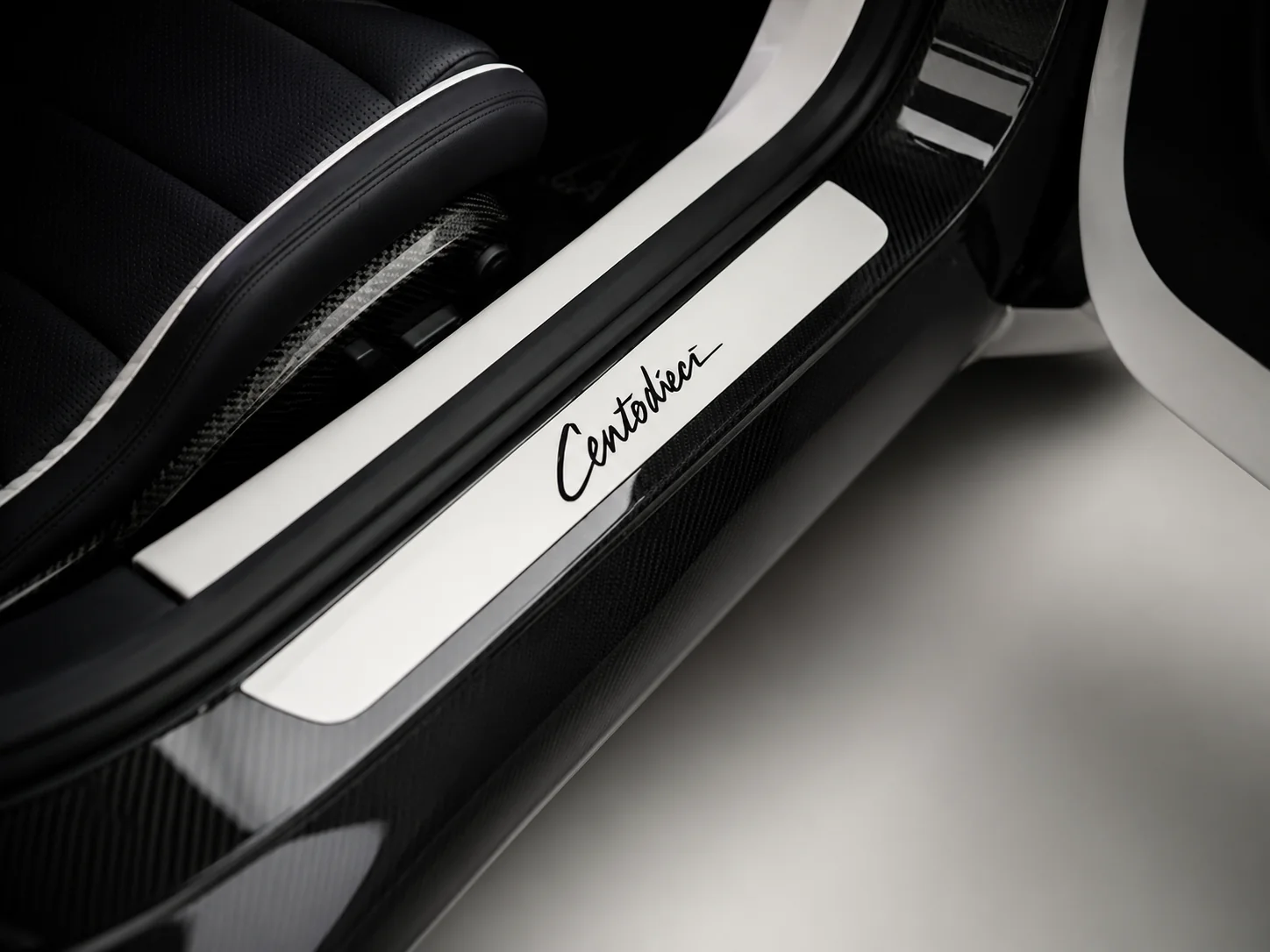
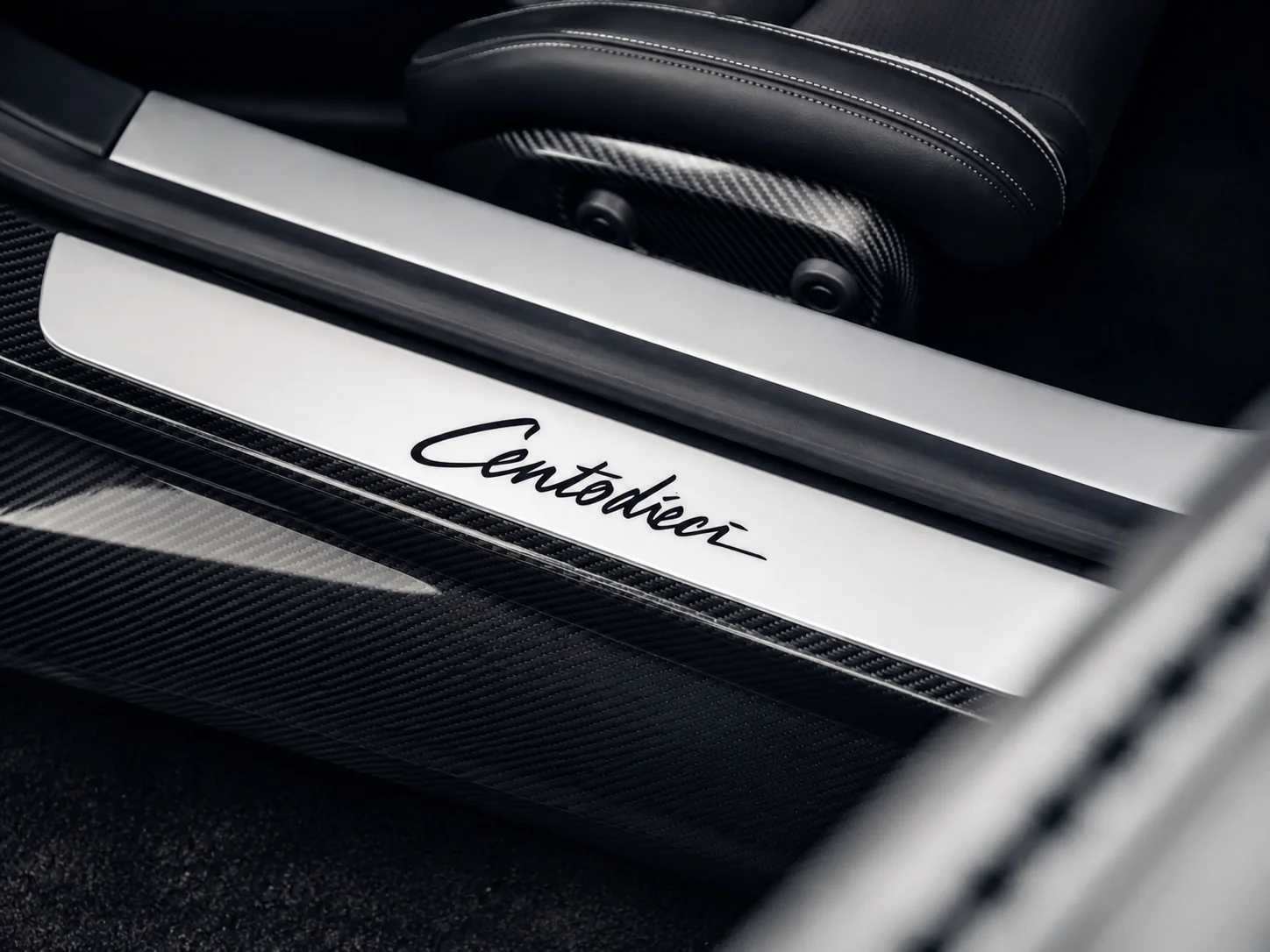
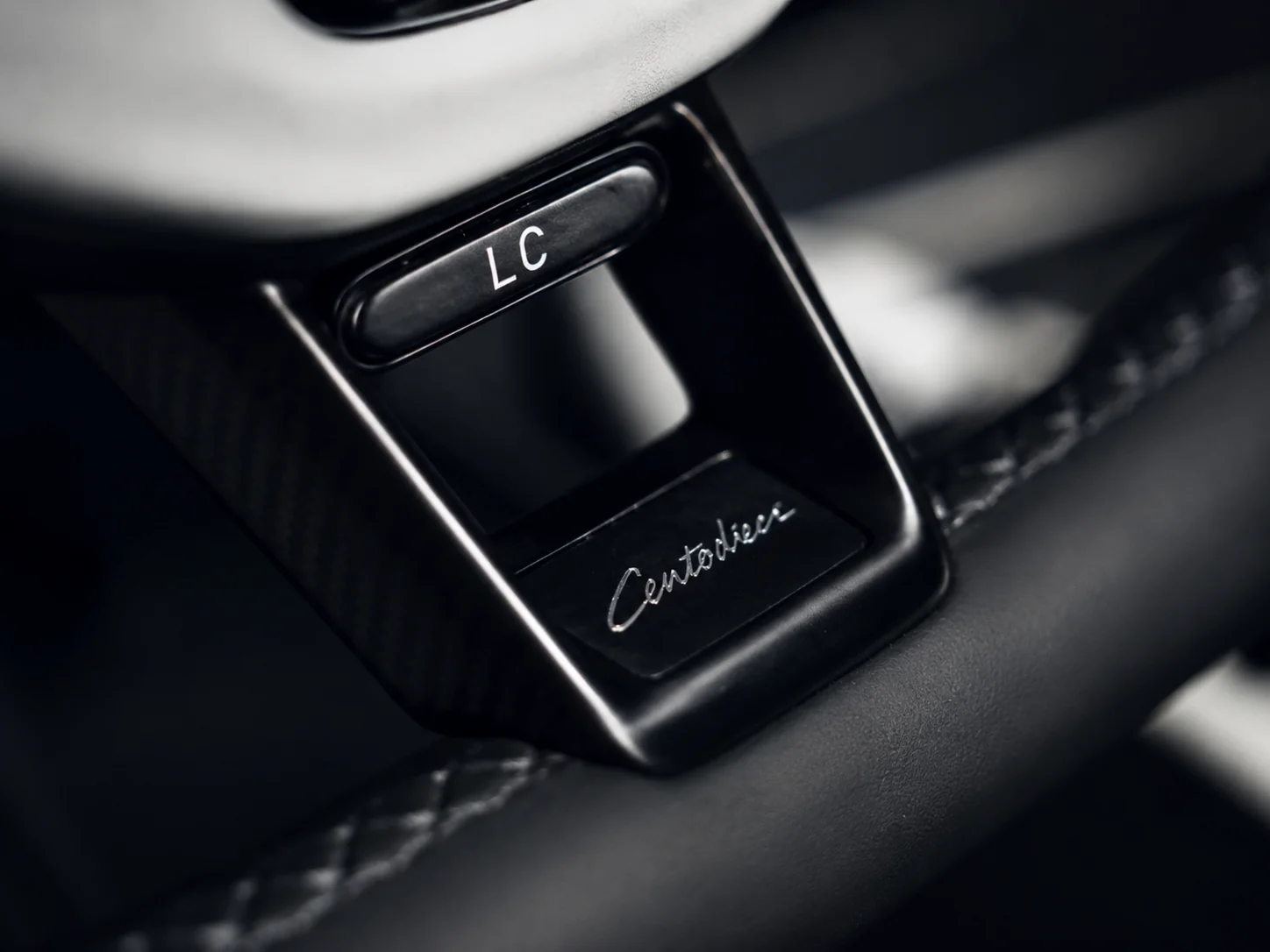
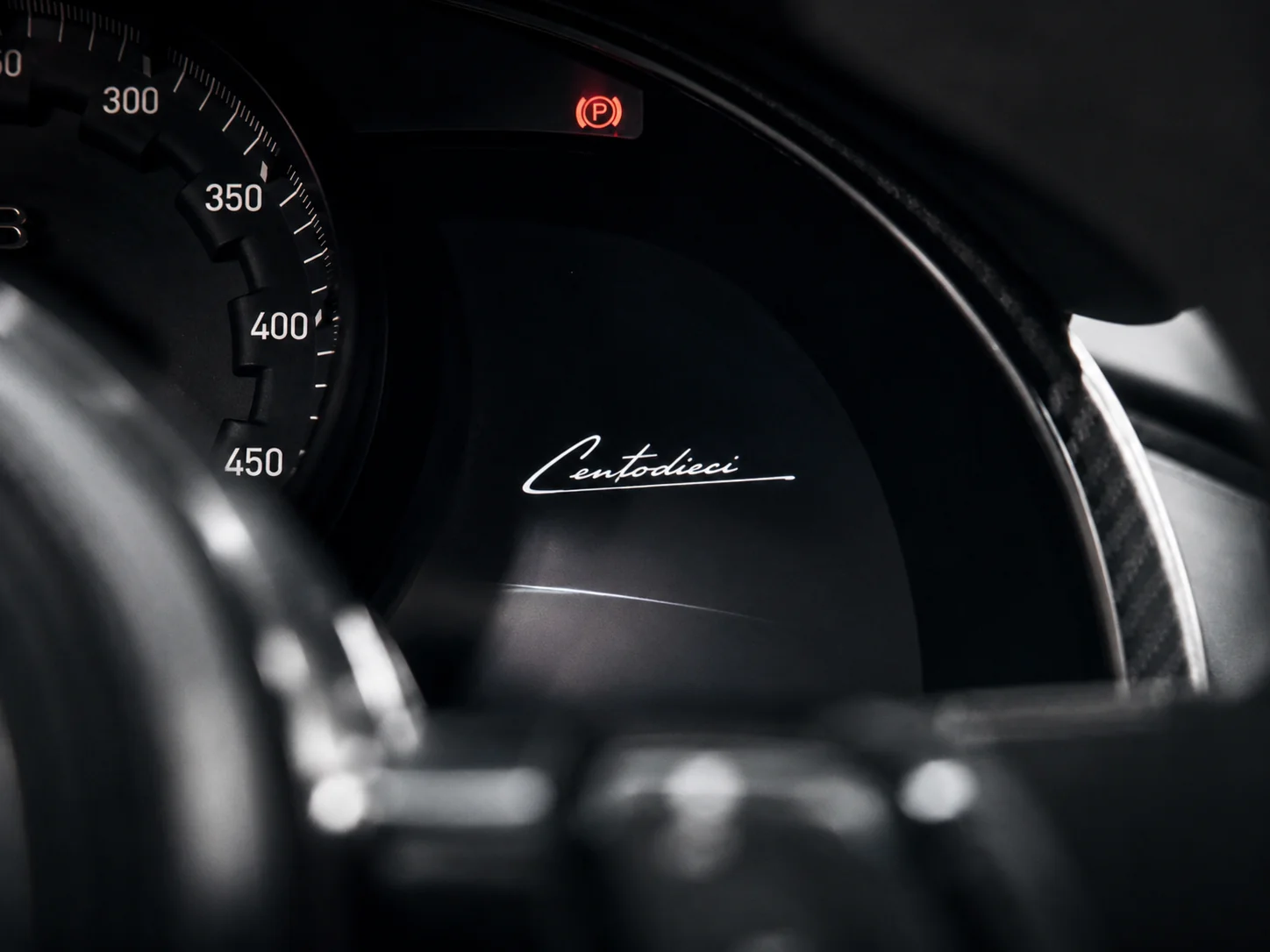
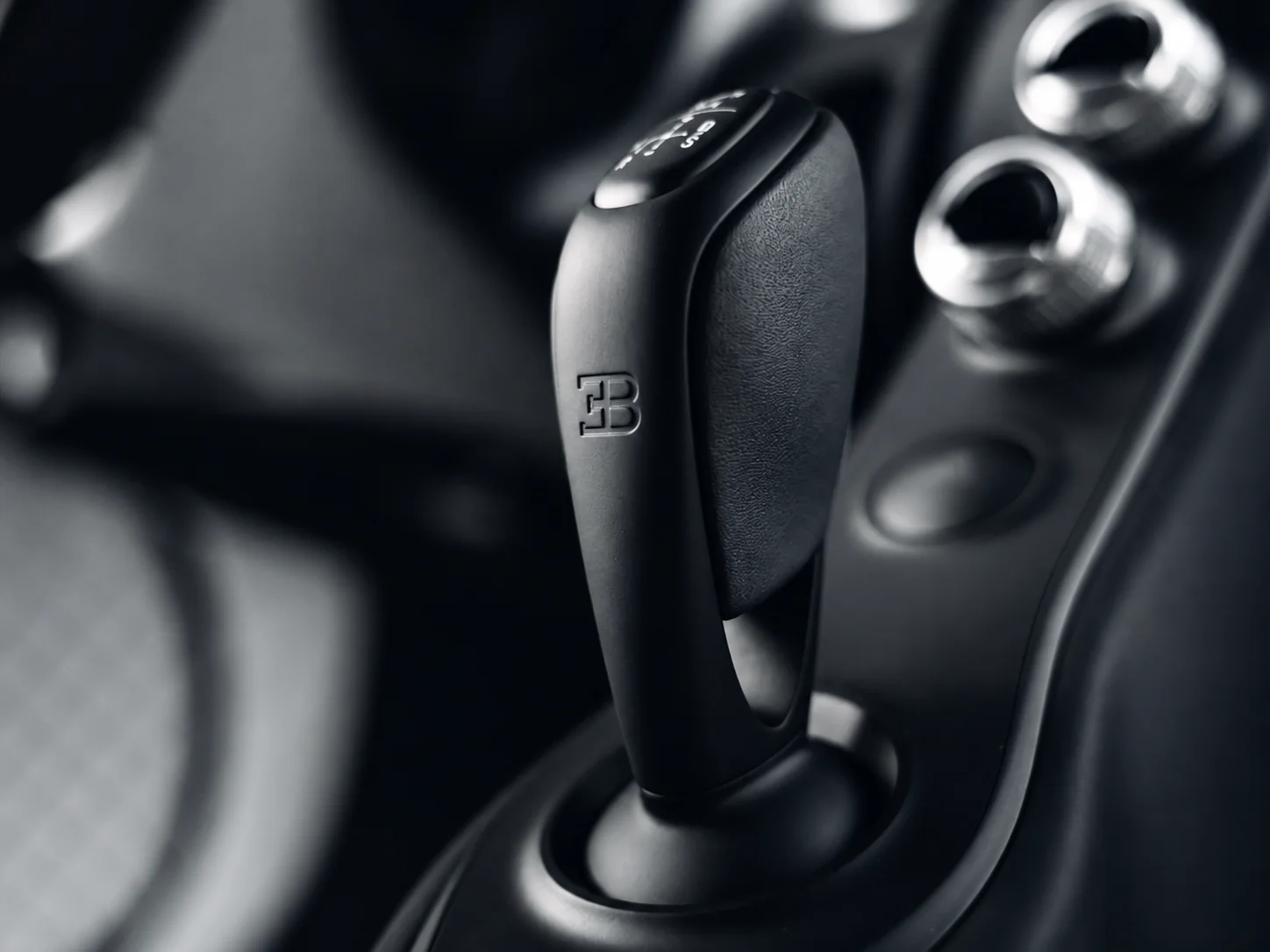
The Bugatti EB monogram is embossed into each headrest. Along the sills, Centodieci is written in script, catching the light as the door opens. Carbon fibre runs through the cabin, left bare rather than painted over.
None of it is carried over from the Chiron. Every surface was reworked for this car alone.
This Example
Since it left the atelier, this Centodieci has seen more of the showroom than the road. It stands in Quartz White to European specification, exactly as it was handed over.
For a car built in a run of ten, that restraint is its own kind of provenance.
Gallery
Nothing on this car is decorative. What looks aggressive up close is doing a specific job.
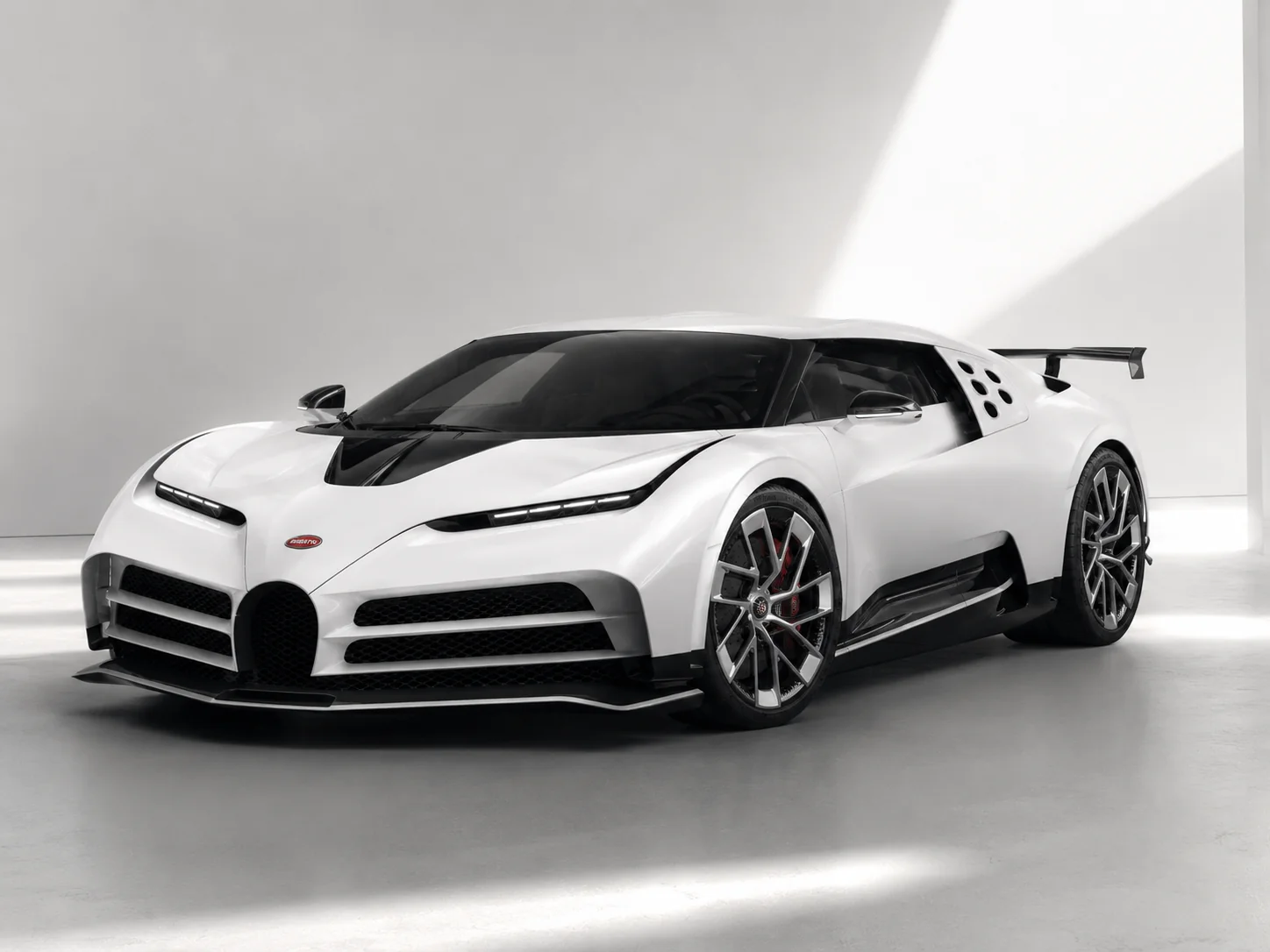
In Detail
Output fits on a spec sheet. These don't: the choices only visible up close.
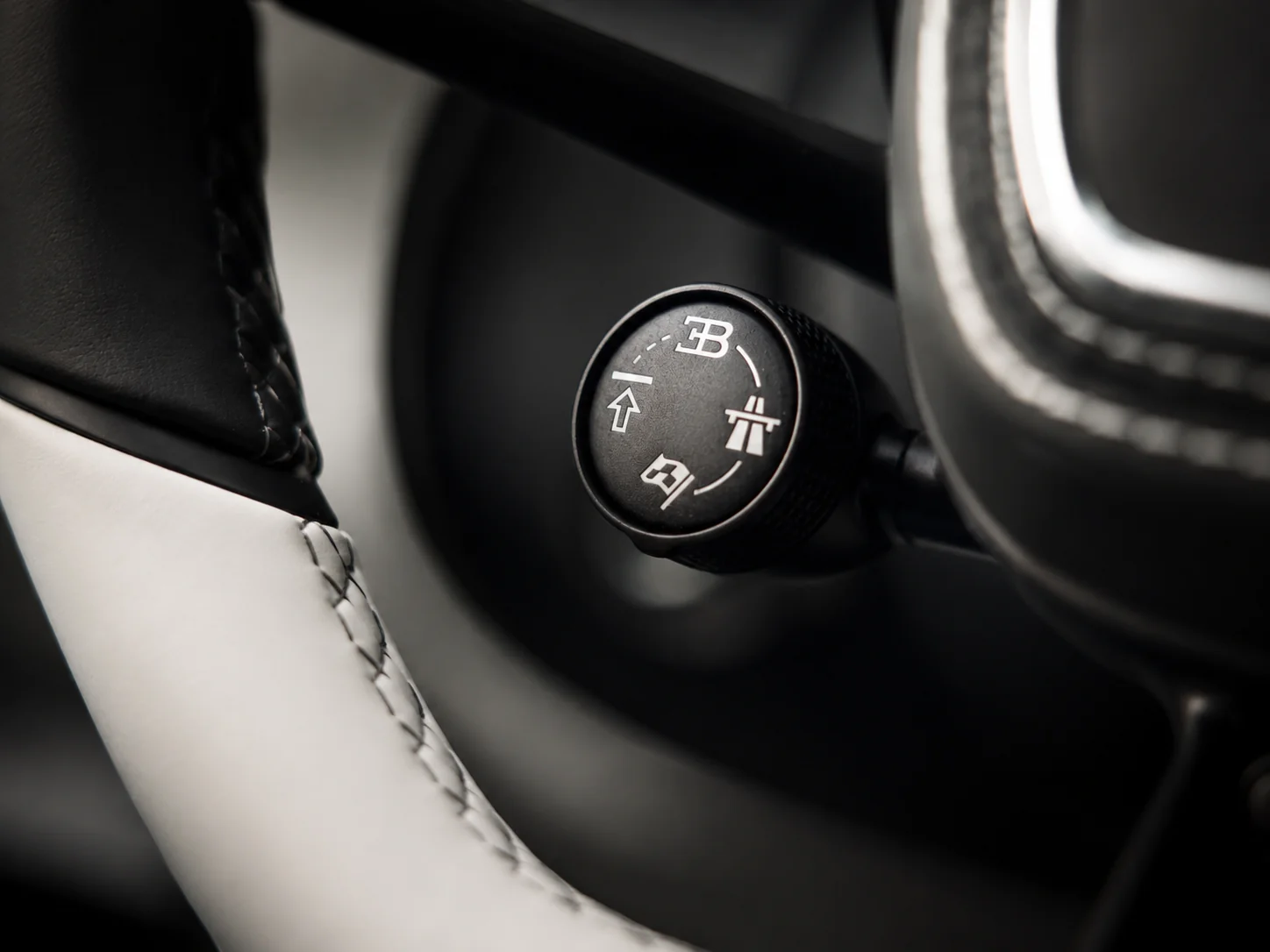
Four driving programs — Lift, EB, Autobahn, and Handling — each altering ride height, from 125 mm at the front in Lift mode down to 95 mm in Handling. The fixed rear wing holds a constant -3° angle regardless of mode.
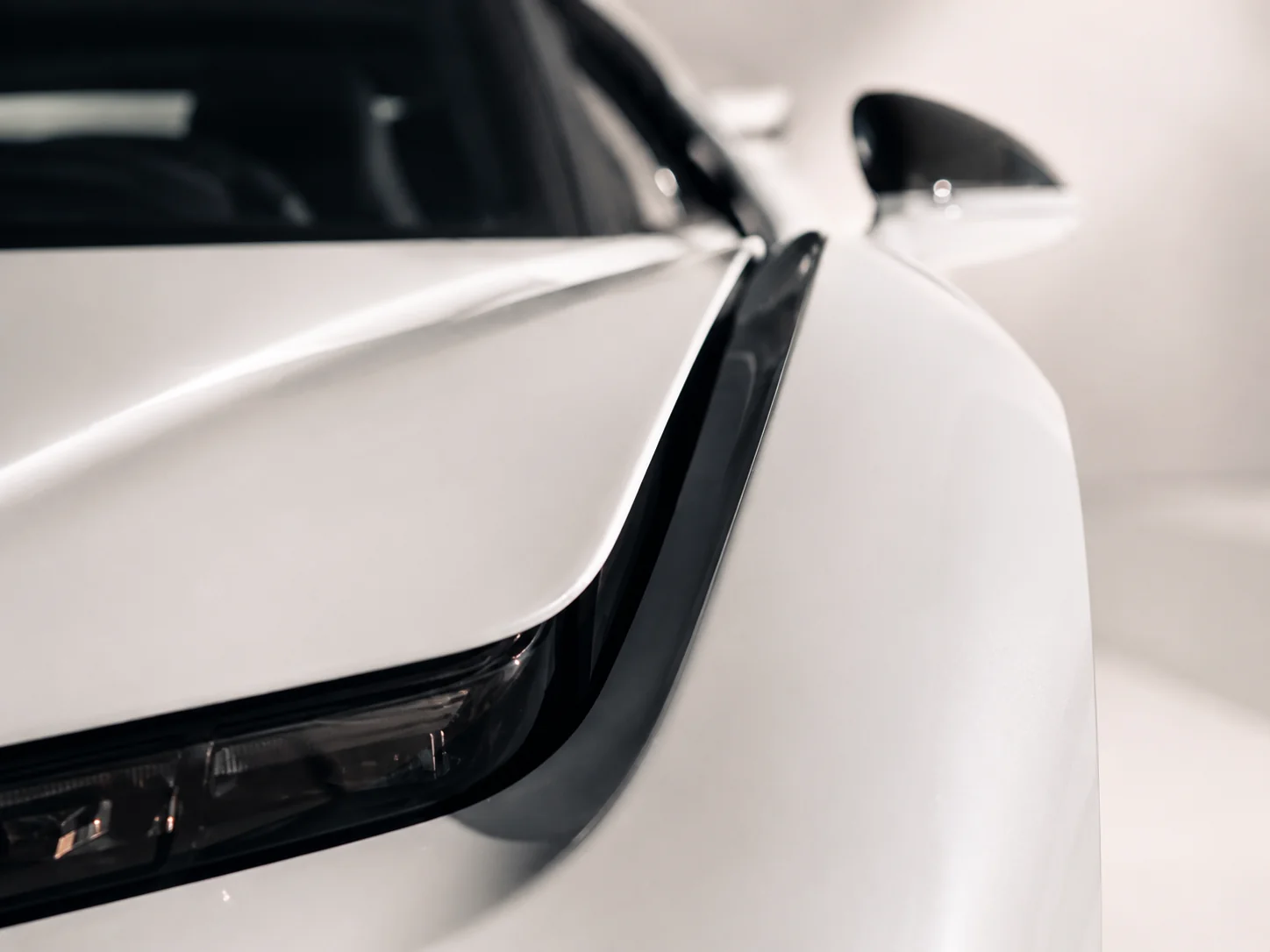
Turning the EB110's flat headlamp panels into these slim strips meant packaging full LED clusters into a fraction of the depth. It is the hardest kind of homage: the look of the original, none of its compromises.
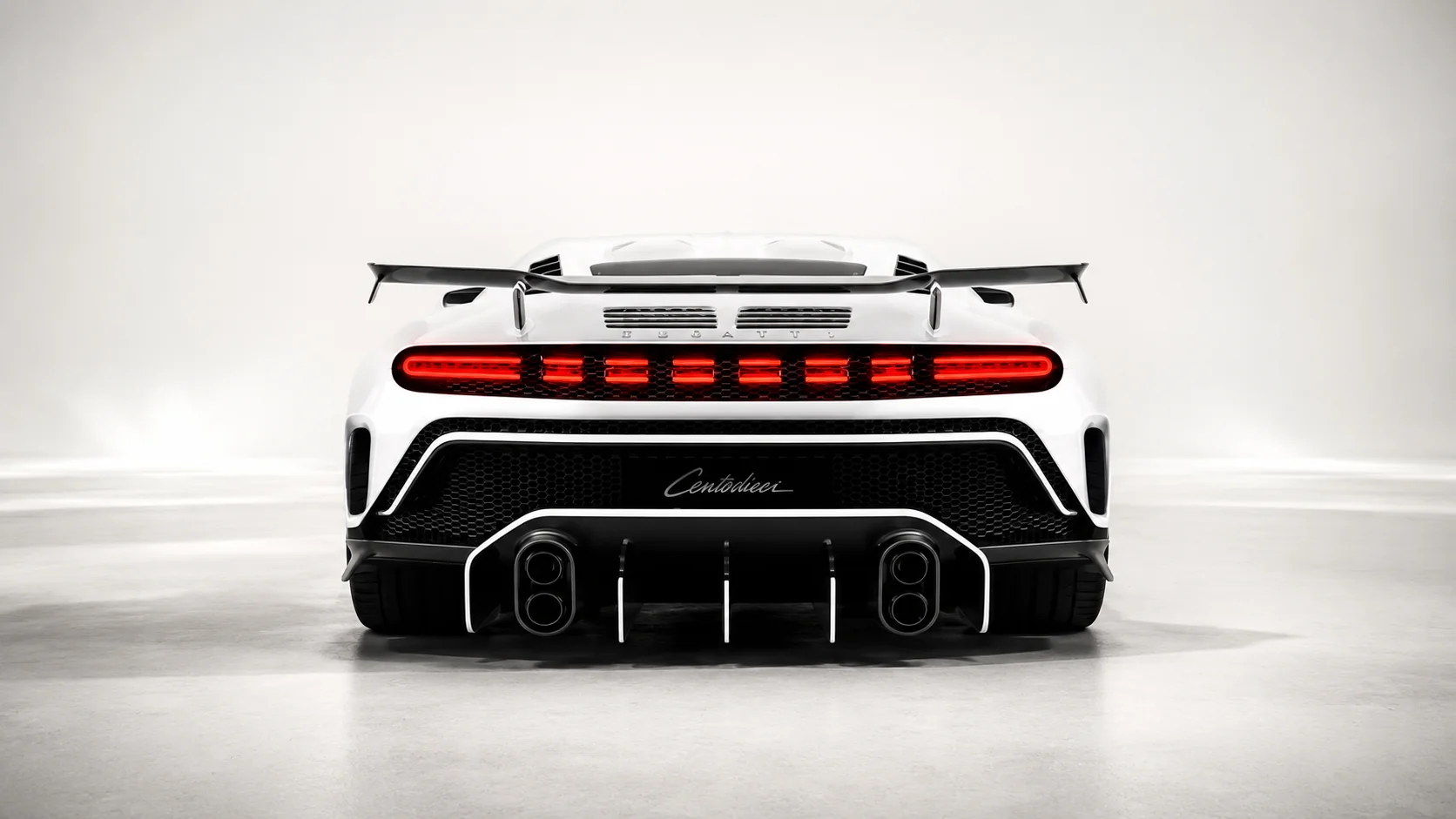
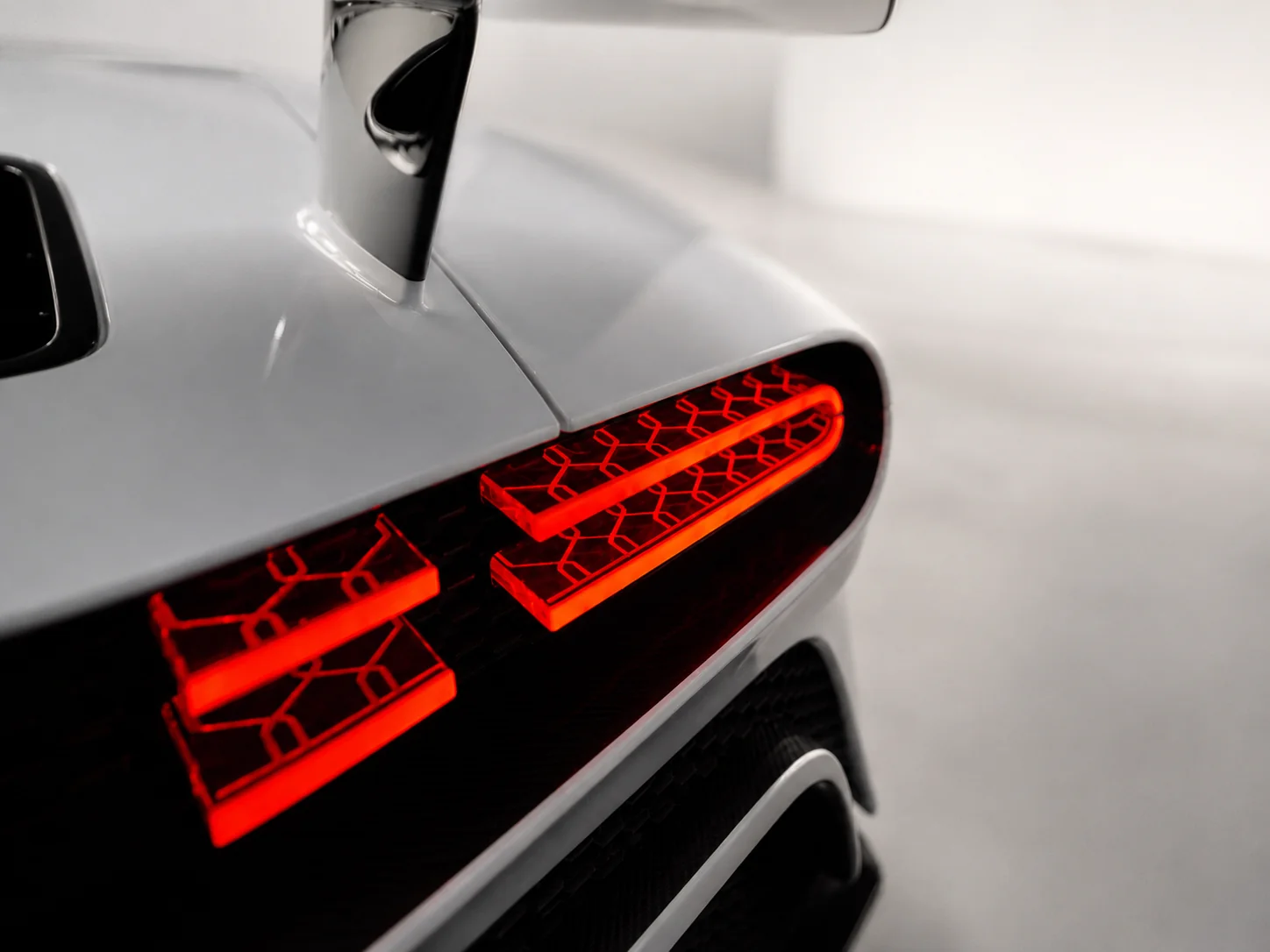
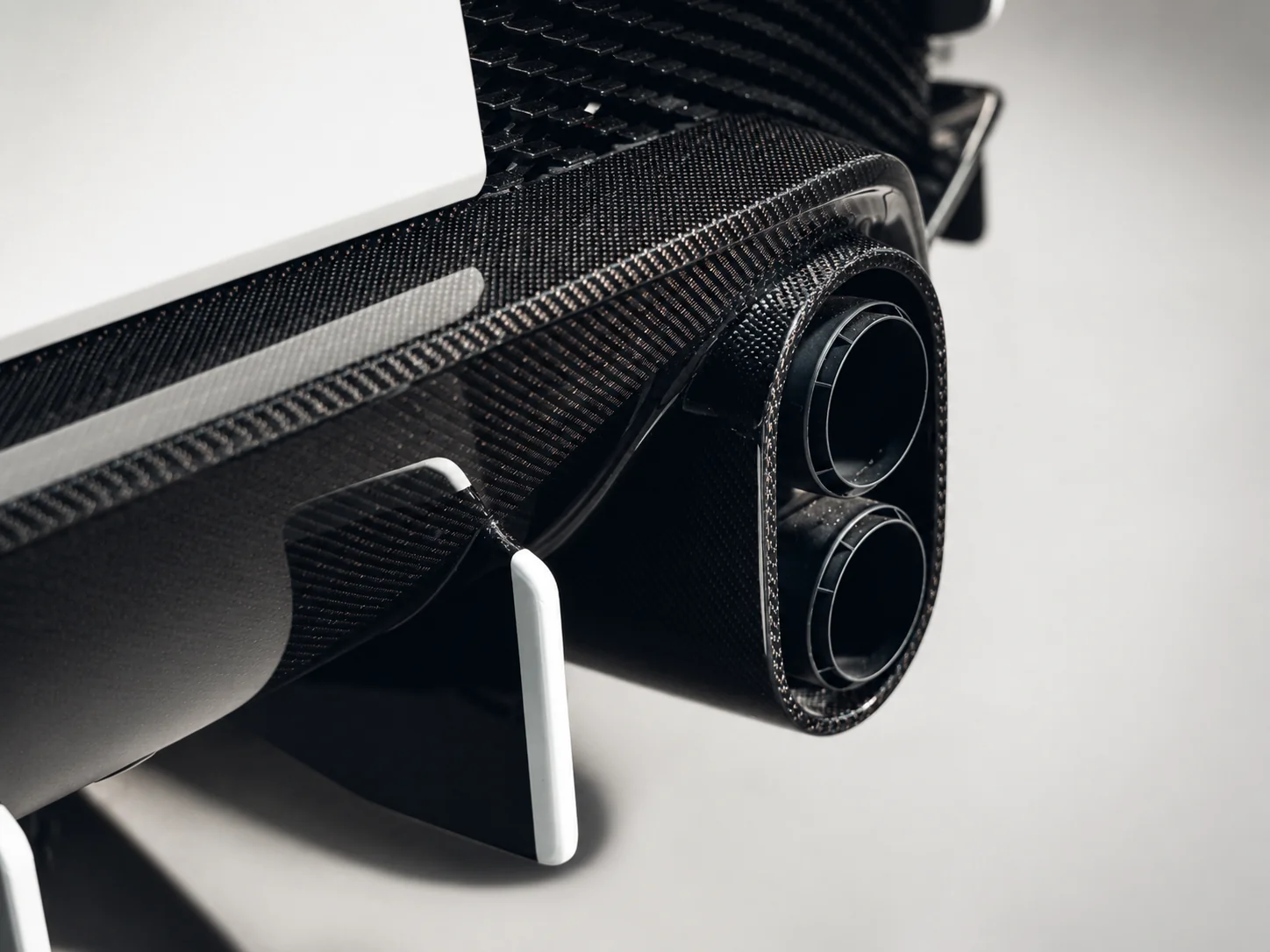
Four exhaust tips sit stacked vertically inside an enlarged diffuser, under a full-width light bar. Where the Chiron reads smooth and continuous, this rear is deliberately graphic, a modern answer to the twin pipes of the EB110 Super Sport
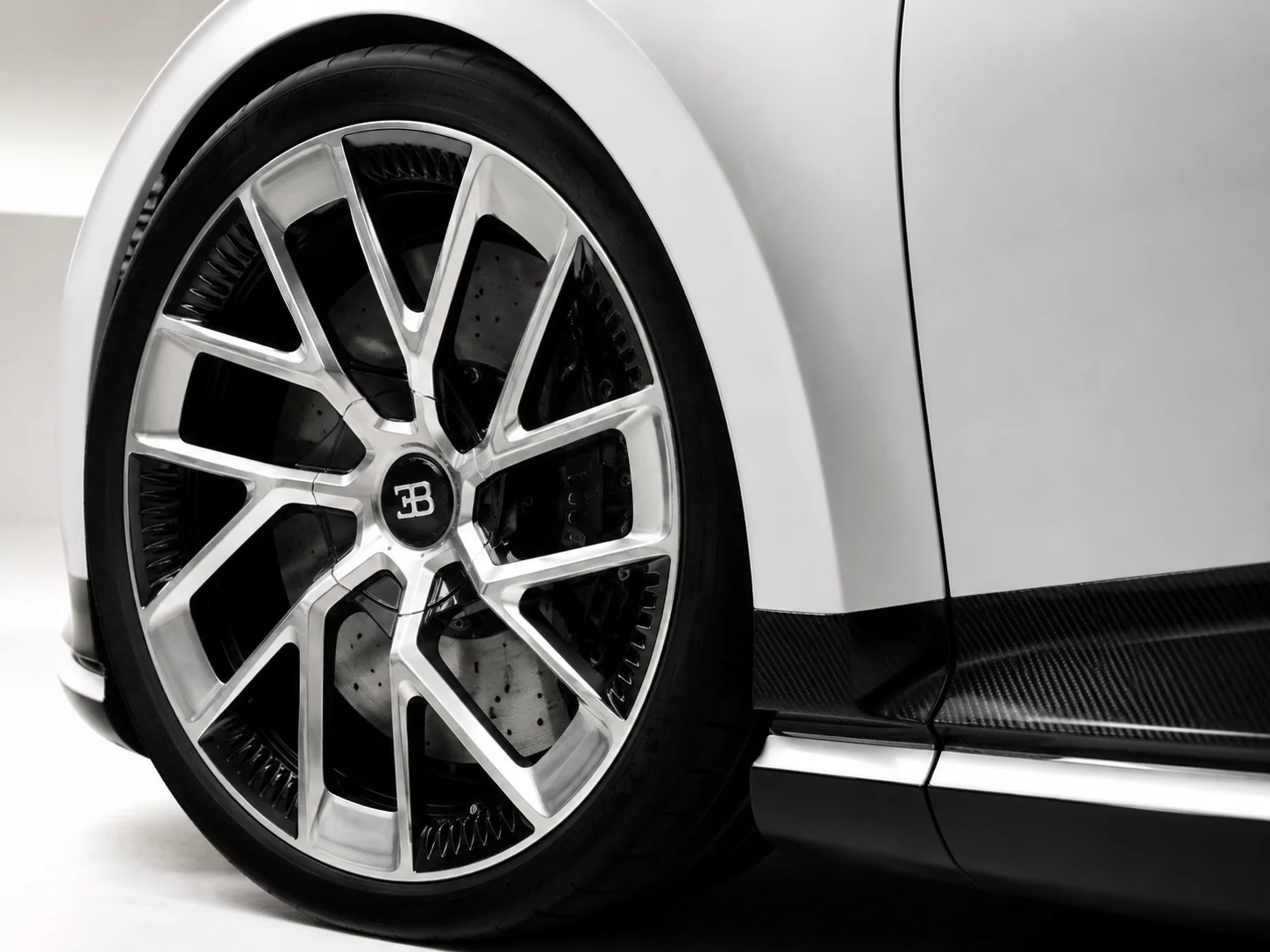
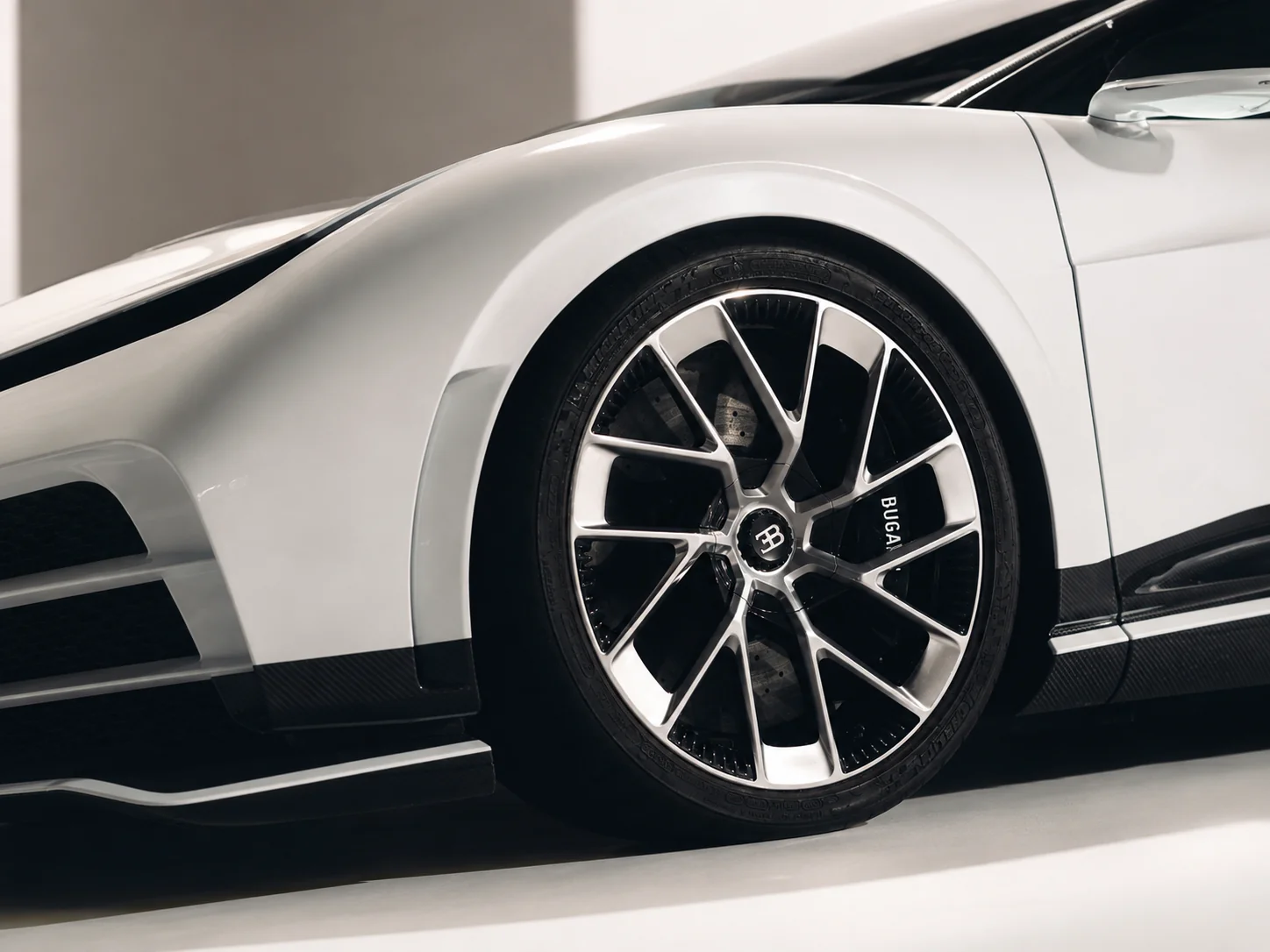
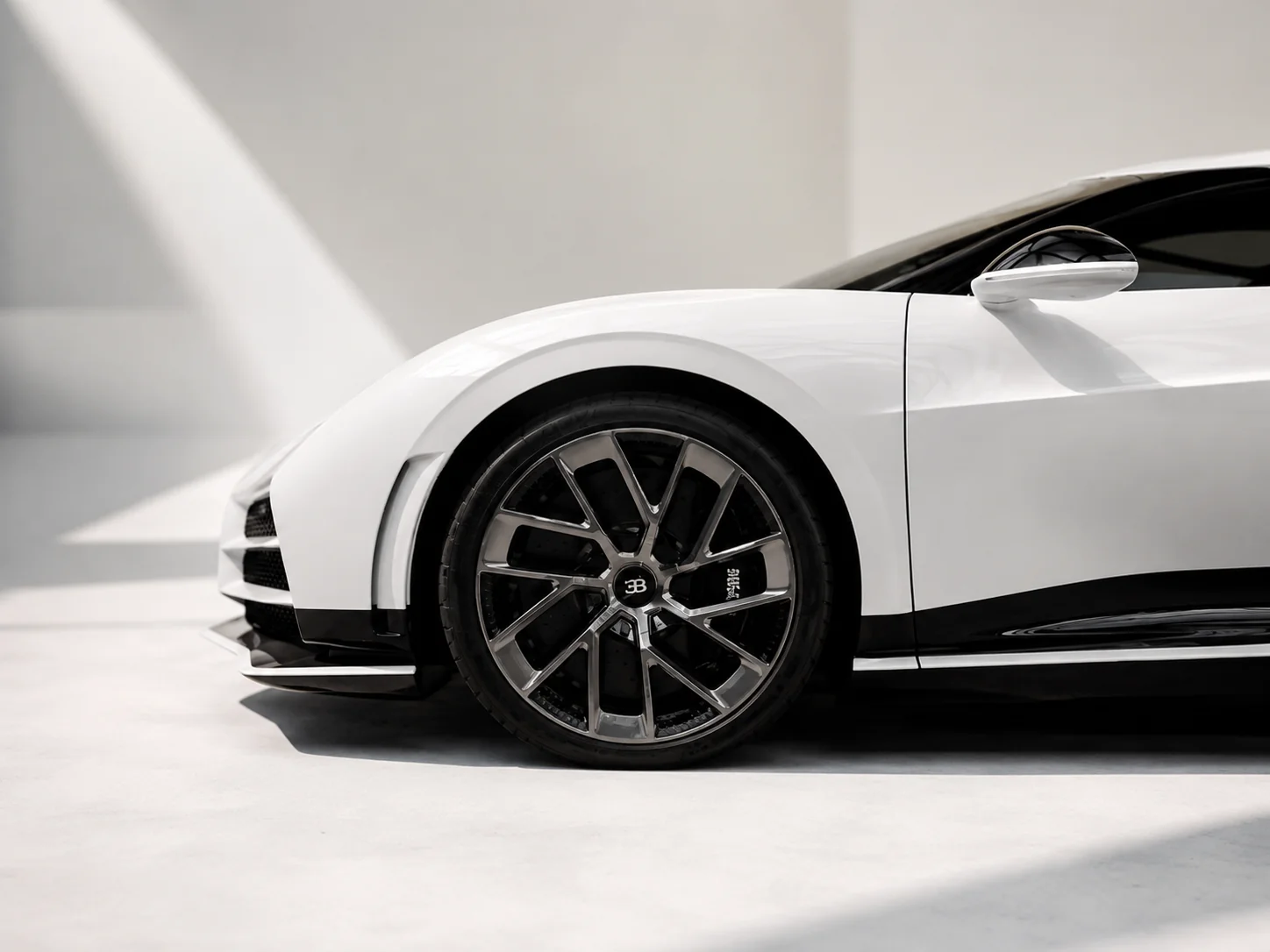
Each wheel carries the Bugatti "EB" monogram at its hub, static even as the wheel spins — a detail shared with the Chiron, engineered rather than simply attached.
Cars like this change hands quietly, and seldom twice in a lifetime. To discuss this example, speak with us directly.